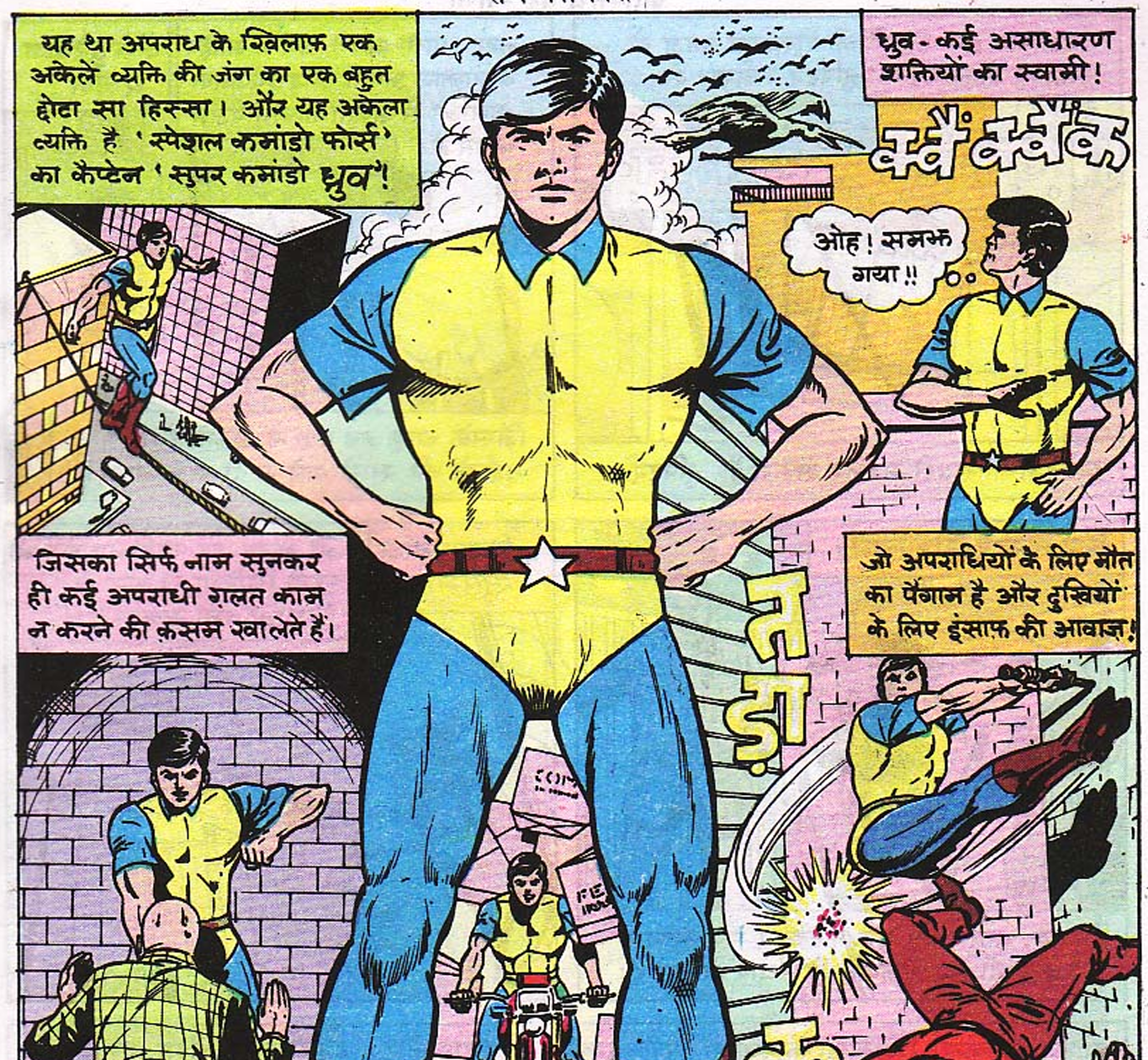
In the 1980s, as a liberalising India opened to the world, the Indian superhero was being Americanised. Raj Comics' answer, in 1987, was radical: Super Commando Dhruv, a young man with no superpowers, no secret identity, and a logical mind as his sharpest weapon.
The 1980s saw what critics call the "Americanisation of the Indian superhero", a clear break from Amar Chitra Katha's tradition of drawing its heroes from Hindu mythology. Import liberalisation through the decade, and the economic reforms of 1991, opened the door to a new kind of comic-book hero. It was in this moment that Raj Comics began publishing, and in 1987 the veteran illustrator and writer Anupam Sinha created one of its most enduring stars: Super Commando Dhruv.
Sinha built the character against the grain of the genre. "There were times when the term Superhero was synonymous with a person having paranormal powers, hiding behind an alter ego and in the age-range of 25," Sinha told Ananya Dhawan in a 2013 interview for eFiction India. "My thinking disagreed with these set norms. I had, and still have, a belief that a logical thinking brain is the greatest power in the world." He found the secret-identity logic hollow, most masked heroes were orphans with no one to protect but themselves, and he wanted a hero children could see as one of their own: "a hero having no freak superpowers, very young and with no alter ego."
A logical thinking brain is the greatest power in the world.
Anupam Sinha, quoted by Ananya Dhawan, eFiction India (2013)
Dhruv made his first appearance in Pratishodh ki Jwala (The Fire of Vengeance, 1987), which told his origin. He was born to Radha and Shyam, trapeze artists at Jupiter Circus, who named him after the brightest star in the night sky, the pole star, dhruv tara. He grew into an expert bike rider, marksman, ringmaster, trapeze artist and bodybuilder, beloved by humans and animals alike, with one singular gift: he could communicate with animals and birds. That talent drew the envy of a rival circus owner, whose henchman set Jupiter Circus ablaze, killing Dhruv's parents. Adopted by a policeman's family, the orphaned teenager turned his grief into a vow to fight crime.
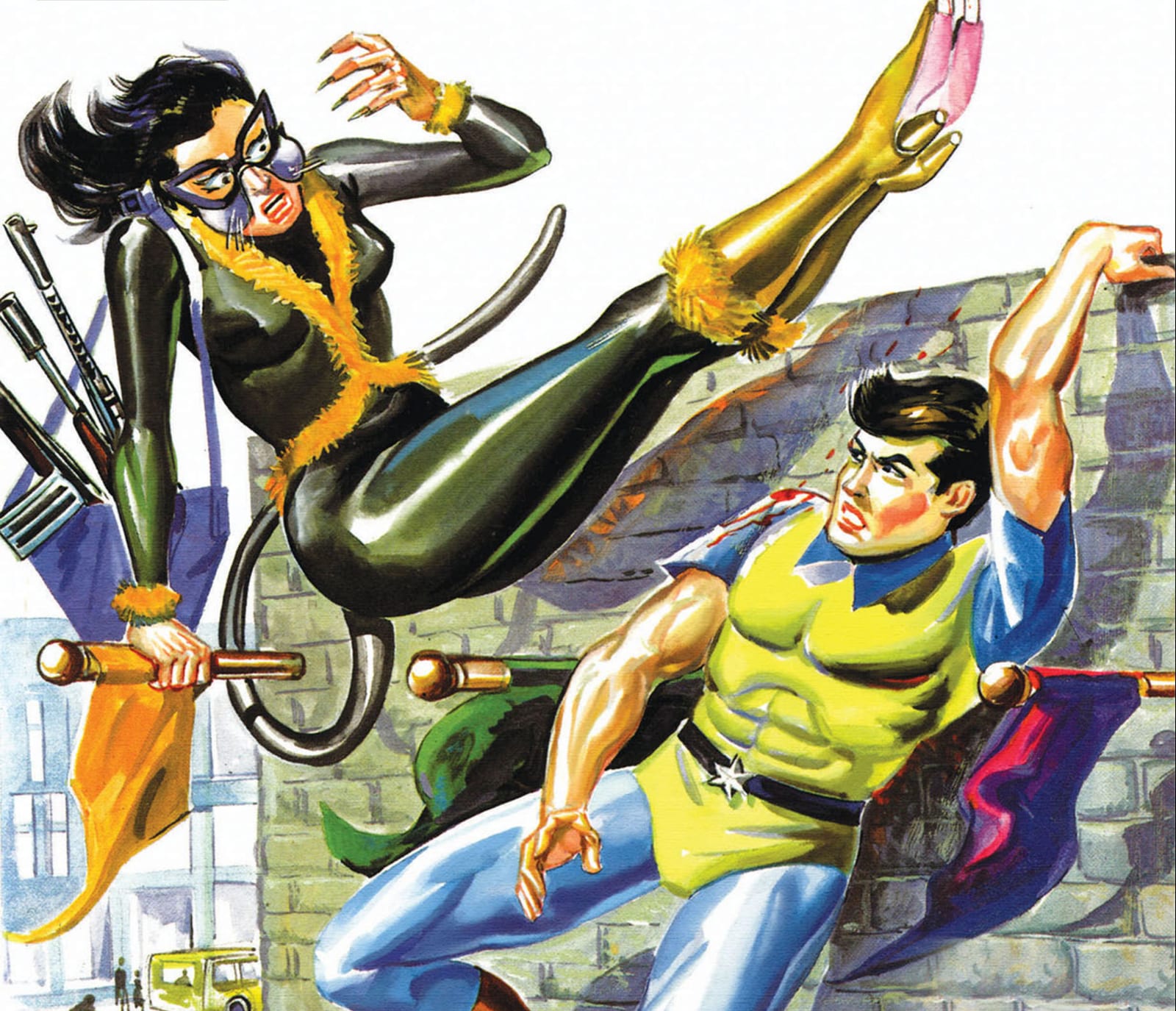
Crucially, Dhruv has no alter ego, a choice Sinha says was made out of respect for the police, who fight crime without the luxury of disguise, and no superpower at all. He is a tall, well-built young man, a brilliant strategist and detective who relies on intellect, the objects around him, and gadgets: signal flares, a multipurpose belt, nerve-gas capsules. Much of his kit comes from his foster sister, Shweta Mehra, a rising scientist who builds him roller-skate shoes, the multipurpose "star line" rope and a "star transmitter" communicator. Unknown to Dhruv, Shweta leads a double life of her own as the masked crime-fighter Chandika, coming to his aid whenever he is in danger.
He works Rajnagar like a detective, patrolling on his bike by night. The dogs and birds of the city are to Dhruv what the Baker Street Irregulars are to Sherlock Holmes, observation towers and informants who alert him to crime across the metropolis. He also commands a government-approved squad of three young crime-fighters: Peter, Renu and Karim.
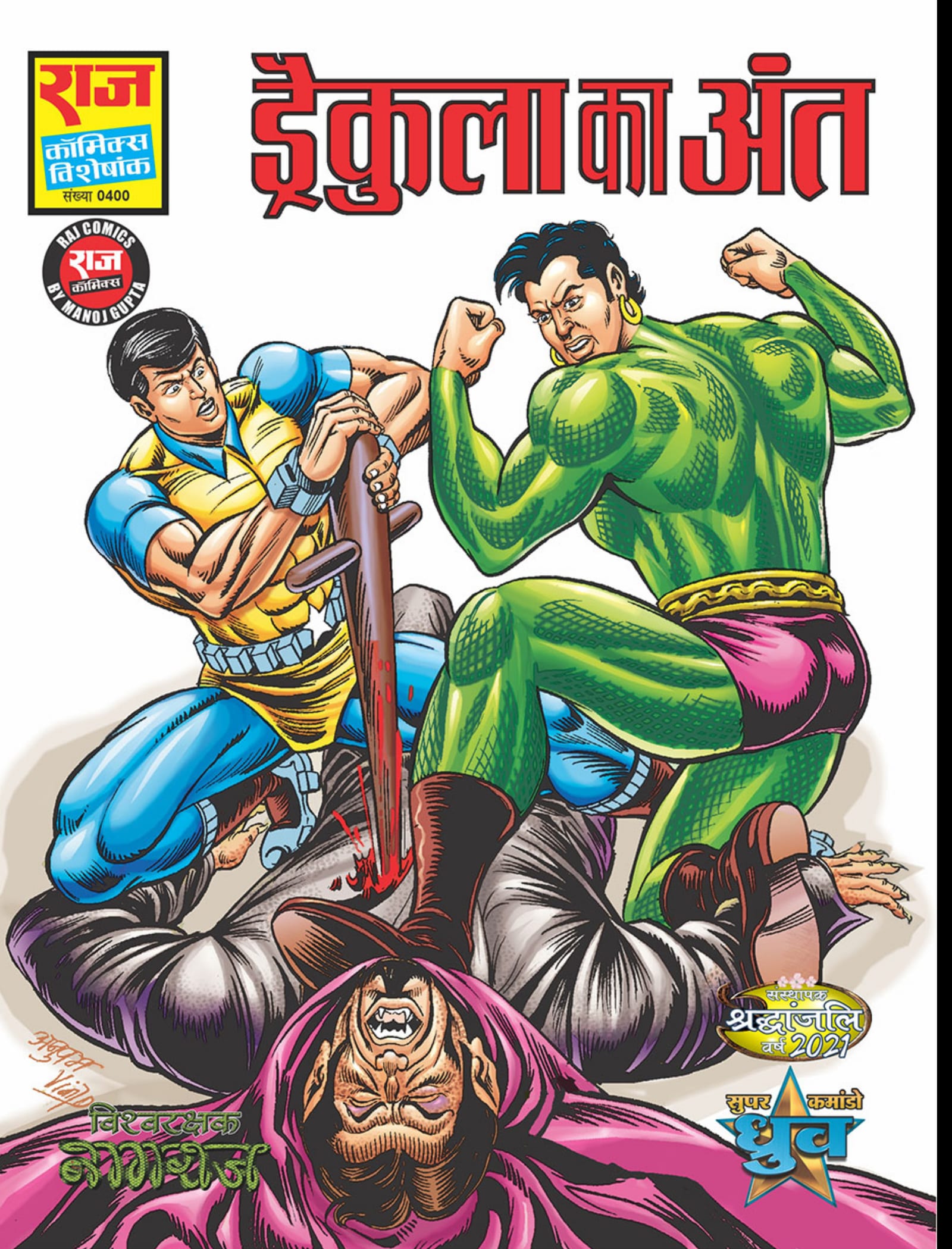
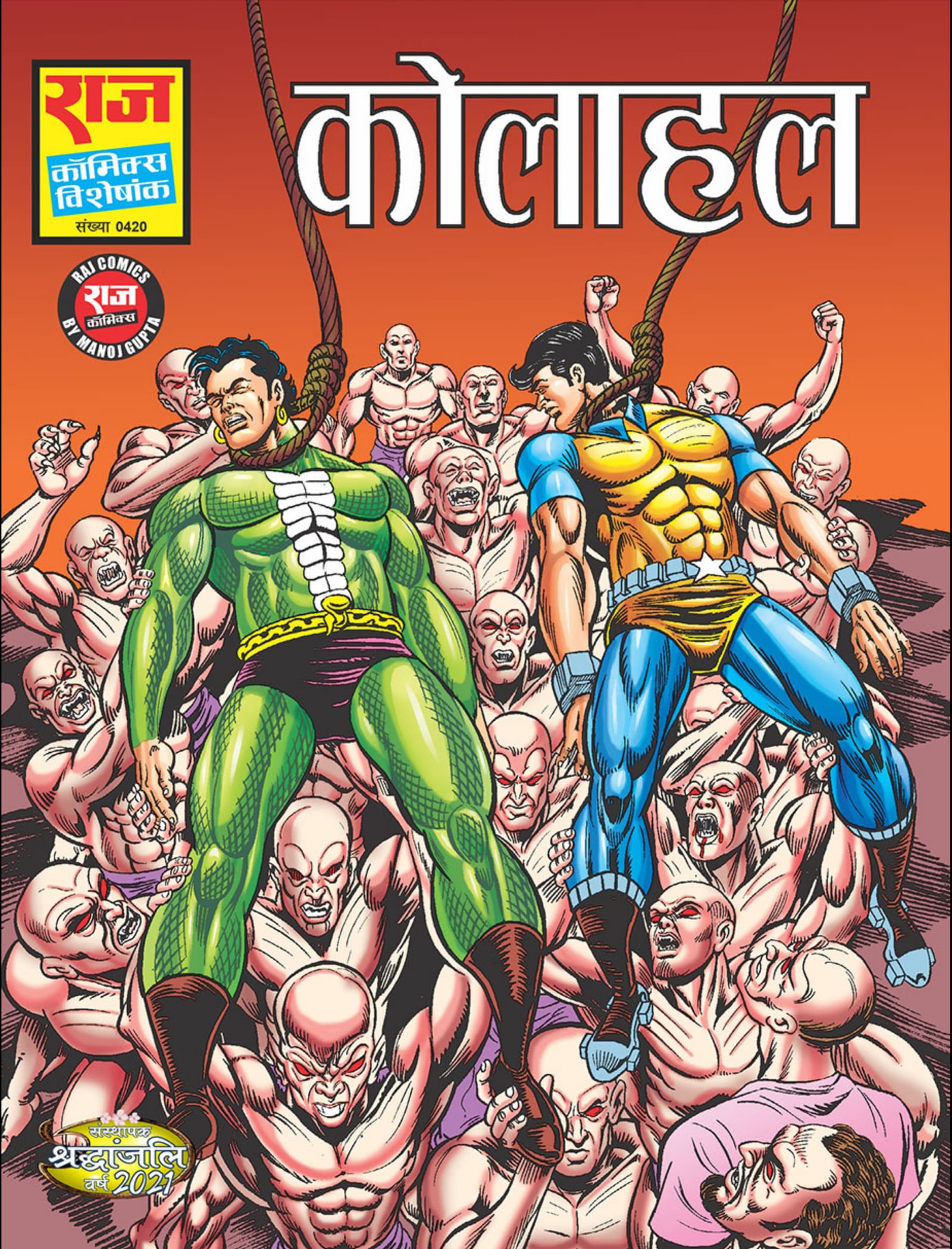
That accessibility was the point. Children related to Dhruv because he read as a bigger, better version of themselves, affable, skilled and close to their own age. Sinha made him a deliberate role model, a hero who eschews violence and uses it only as a last resort. "Children see the world very differently," he told Comic Con India in 2012. "The psychology of being dependent, of 'I must have a person to protect me from any impending danger', is essentially a child's psyche. That's why I wrote this character."
The books are also defined by their rogues' gallery. Among the most memorable are Grandmaster Robo, the half-human, half-cyborg head of a global crime syndicate, immune to mamba venom and able to fire lasers from his left eye; Mahamanav, whose psychic powers can trigger an ice age; the gadget-obsessed Bauna Vaman; the demon Chandkaal; Chumba, who paralyses foes with electromagnetic waves; and Dhwani Raj, who weaponises sound. Against them Dhruv is a study in contrast, a compassionate hero who offers villains the chance to redeem themselves, and whose very lack of powers, forcing him to out-think his enemies, becomes his greatest strength.
Rajnagar itself is built to test him: a malleable metropolis of skyscrapers, boulevards and nightclubs that also holds a nuclear plant, a seafront and rainforests, and sits within reach of desert and the Himalayas. "My cities are planned to have waterfronts, jungles, swamps, dense populations, dark narrow lanes, financial and scientific hubs, all with a possibility of evil," Sinha told The Indian Express in 2012. "It's not exactly New York or Mumbai, but not too different either." It is a microcosm of the world that lets Dhruv face every climate and creature without ever leaving home.
Born of India's hybrid popular culture rather than a simple West-to-East translation, Dhruv treads a middle path, Americanised in his iconic costume and his guardianship of a city, yet wholly Indian in his values, his family and his refusal of the mask. Fans have long read him as a blend of Batman and Robin: Batman's crime-fighting craft, Robin's origin. The gamble paid off. He became one of the most popular heroes not only in the Raj Comics universe but across Hindi comics, a distinctly Indian icon who redefined heroism for a generation raised on both mythology and modernity.
Sources for Anupam Sinha’s quotes: Ananya Dhawan, “A Chat with Anupam Sinha,” eFiction India, 15 November 2013, as cited in Sahapedia, “Super Commando Dhruv: The Hero Without Superpowers” (https://www.sahapedia.org/super-commando-dhruv-hero-without-superpowers). Comic Con India, “Days of the Raj—II,” 2012 (https://web.archive.org/web/20120714011154/http://comicconindia.com/index.php?page=icj&blog-id=26). Priyanka Kotamraju, “The man who made them superheroes,” The Indian Express, 28 October 2012 (https://indianexpress.com/article/cities/delhi/the-man-who-made-them-superheroes/). Additional context: Raminder Kaur and Saif Eqbal, Adventure Comics and Youth Cultures in India, Routledge, 2019.