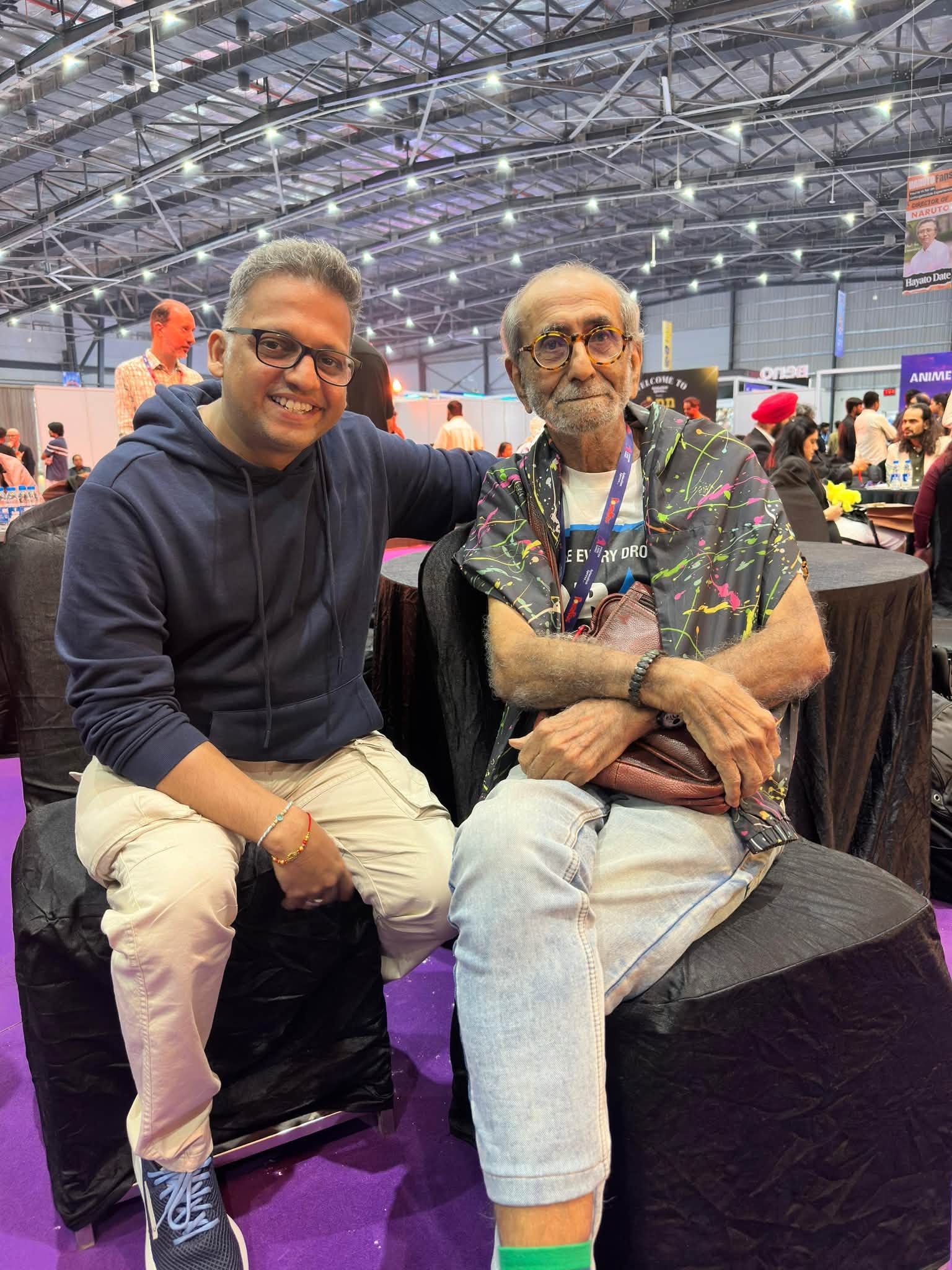
At 91, Aabid Surti still possesses something that many artists spend a lifetime trying to preserve: an extraordinary curiosity about the world around him.
His energy, his enthusiasm for life, his humour and, above all, his warmth and humility remain remarkable. Every conversation with him seems to reveal another story, another experiment, another chapter from a career that has refused to stay within a single medium. Spending time with Surti is not merely an opportunity to meet a legend of Indian comics. It is an opportunity to learn from a creator who has spent decades following his curiosity wherever it led him. He still remains deeply engaged with the world around him, quick with a joke, generous in conversation and genuinely interested in ideas.
That spirit was recognised yesterday when Surti received the Ram Mohan Lifetime Achievement Award. The honour has a special resonance given his own association with Ram Mohan, one of the pioneering figures of Indian animation. Their connection brings together two important chapters in the history of Indian visual storytelling, animation and comics.
For generations of Indian readers, Surti's name is closely associated with characters such as Bahadur, Dhabbuji, Inspector Aazad and Shuja. But the comics are only one part of his remarkably varied creative journey. Over the decades, he has moved between literature, painting, cinema, theatre, animation and illustration, approaching each medium with the same willingness to experiment.
Perhaps that is what makes Surti's career so interesting. He never appeared particularly interested in staying within the boundaries of a single profession. When one creative form offered something new to explore, he followed it. The result is a career that stretches across several decades and mediums, with each phase revealing another side of the artist.
His formal training began at Mumbai's Sir J. J. School of Art, and his first solo exhibition of watercolour landscapes was held in Nainital in 1958. Painting remained an important part of his creative life even as writing and comics gradually became more prominent. His experiments with different forms of visual art eventually took his work beyond India. Among the more unusual chapters in this journey was his experimentation with glass painting and other techniques, with some of his artworks finding their way to Japan and being acquired for display at Japanese airports.
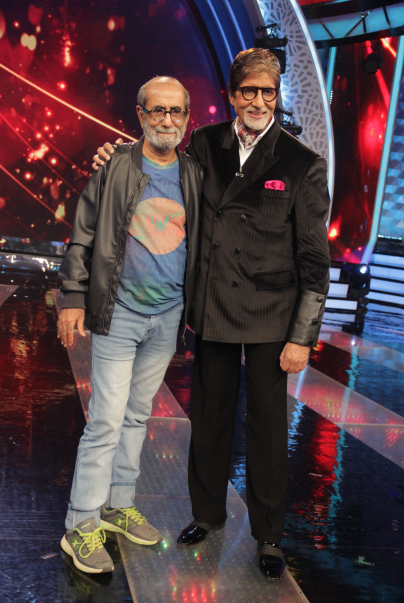
Writing became another major avenue for Surti's creativity. His literary output spans novels, short stories, poetry, plays, children's literature and other forms of writing. Over the years, he has written more than 80 books, building a body of work that sits alongside his contribution to comics and visual art. His writing has also received significant recognition, including a National Award for his short-story collection Teesri Aankh.
His literary work often explored subjects very different from the humour and adventure associated with his comics. Surti has never been afraid to experiment with form or tackle uncomfortable themes. His novel The Black Book, published in the 1970s, generated controversy for its treatment of religion and morality, while his autobiographical novel Musalman drew upon his childhood and his experiences of growing up in Mumbai's Dongri. These works reveal another side of an artist who was capable of moving from light-hearted satire to serious social and personal themes.
Then there are the comics, where Surti's influence on Indian popular culture is perhaps most immediately visible.
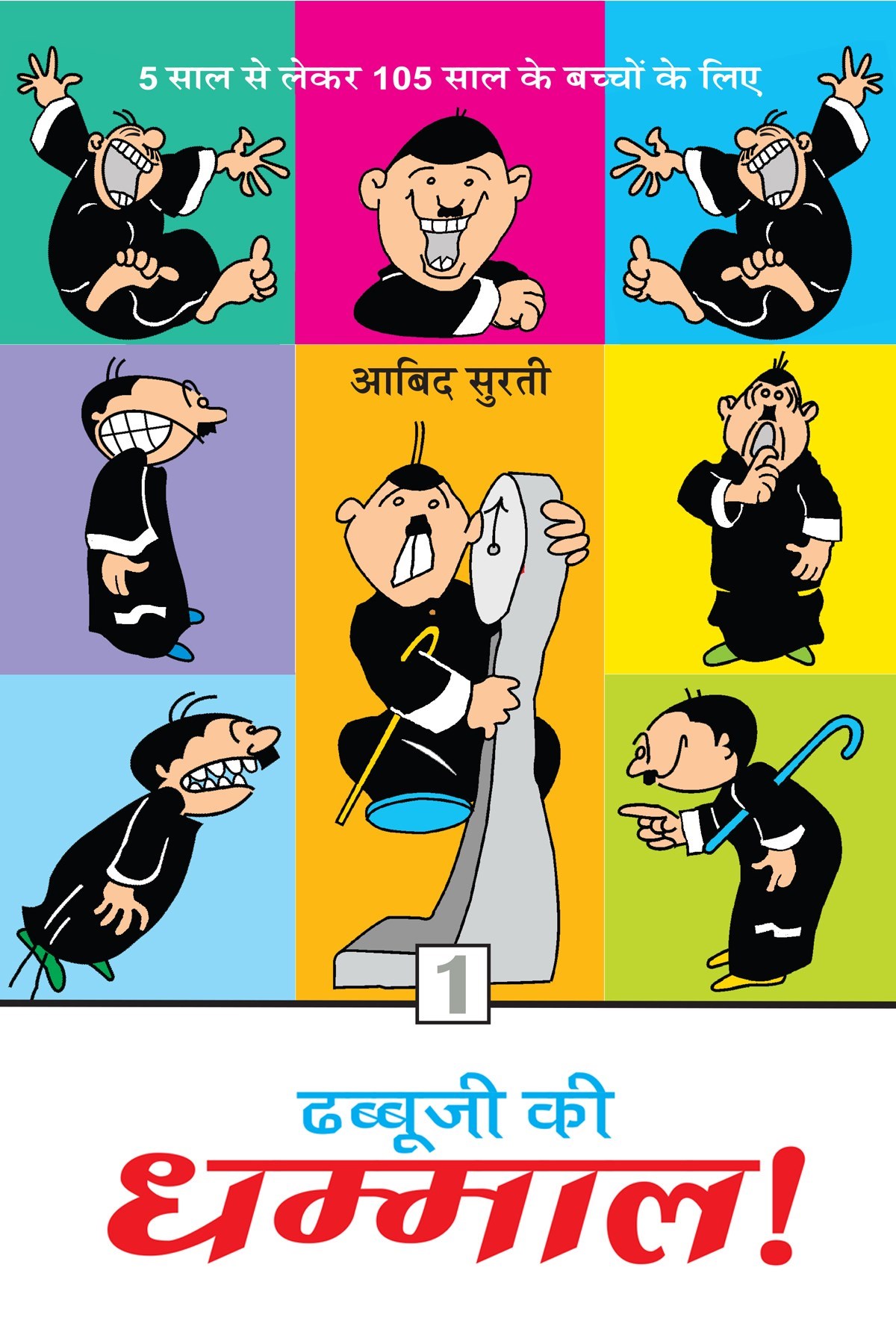
One of his earliest and most beloved creations was Dhabbuji, the perpetually bewildered, sharp-witted character who became a fixture of Hindi magazine humour. The strip appeared in Dharmayug and found a devoted readership because its humour was rooted in everyday Indian life. Dhabbuji did not need an elaborate fictional universe. His world was the familiar world of offices, families, neighbours, social conventions and everyday frustrations.
That quality became an important part of Surti's cartooning. His humour could be simple on the surface while still capturing something recognisable about the people and society around him. Dhabbuji became one of those characters that readers could encounter again and again without losing his appeal.
But Surti's most enduring contribution to Indian comics would arrive in the form of Bahadur.
In the 1970s, Indrajal Comics was looking to develop an Indian comic-book hero who could stand alongside the international characters that dominated the market. Surti's answer was Bahadur, a hero rooted firmly in an Indian setting rather than an imitation of the American superhero.
Bahadur's first story appeared in 1976, and the character was set against the backdrop of the Chambal region, an area then strongly associated with dacoits and lawlessness. Surti gave him an unmistakably Indian identity, right down to his appearance. Bahadur's combination of a kurta and jeans made him look contemporary and familiar, rather than like a character transplanted from another country.
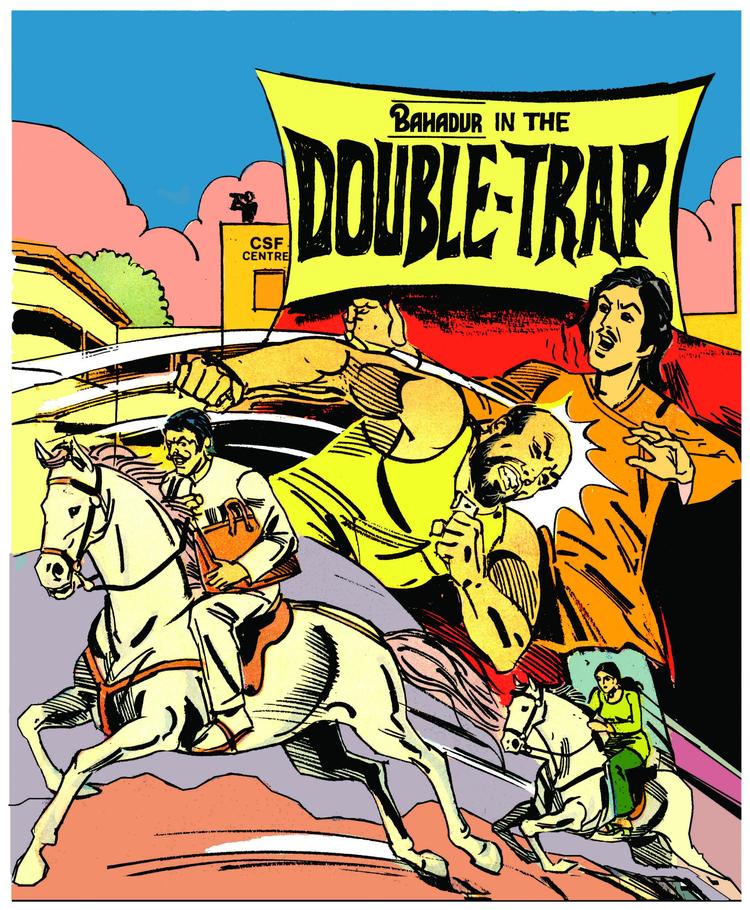
That decision was more significant than it might appear today. At a time when readers were increasingly exposed to characters such as Superman, Batman and other Western superheroes, Bahadur demonstrated that an Indian hero could be just as compelling without abandoning his cultural identity.
Bahadur went on to become one of the most recognisable characters in the history of Indian comics. For many readers, he was not simply a fictional hero but a part of their childhood. His stories combined action and adventure with recognisably Indian landscapes, people and social settings.
Surti continued to create characters and stories beyond Bahadur. Inspector Aazad, Inspector Vikram and Shuja are among the other names associated with his comic-book work. Inspector Aazad, in particular, became popular enough to attract interest from the Hindi film industry. Raj Kapoor reportedly considered bringing the character to the screen, and a screenplay was developed, although the proposed film was never made.
Surti's relationship with cinema was not limited to characters that might have become films. He himself worked across the medium, including as a writer and filmmaker. His experiences in cinema also influenced his understanding of storytelling. Film taught him about rhythm, editing and the importance of knowing when to move a story forward, lessons that could equally be applied to comics and literature.
His association with Ram Mohan is another fascinating aspect of this journey. Ram Mohan was one of the key figures in the development of Indian animation, and his work helped establish animation as a serious creative and professional field in India. Surti's association with him connects his career to a formative period in the country's animation history.
It is fitting, then, that a lifetime achievement award named after Ram Mohan should recognise Surti. Both men belonged to a generation of creators who were helping establish Indian visual storytelling in an era when the infrastructure and audience for such work were still developing.
Surti's creative interests extended even further. Theatre became another medium through which he expressed himself. He wrote plays in Hindi and Gujarati, including He is Radha, which went on to have a successful run on stage. His work in theatre, much like his work in comics and cinema, reflected his interest in characters and human behaviour.
The sheer range of these pursuits makes it difficult to place Surti neatly into a single category. Cartoonist is accurate, but incomplete. Comic-book creator is accurate, but incomplete. Author, painter, filmmaker or playwright, each describes only one part of the picture.
Perhaps the simplest way to understand him is as an artist who remained curious.
That curiosity also explains some of the lesser-known corners of his career. Surti experimented with visual techniques, explored different literary forms, moved between commercial and serious storytelling, and repeatedly tried things that were outside the obvious path suggested by his earlier successes.
There is an especially interesting connection to Amar Chitra Katha hidden within this long career.
Despite becoming one of the most important creators of modern Indian comic characters, Surti wrote only one title for the iconic comic-book series.
That title was Nal Damayanti.
The 1971 Amar Chitra Katha edition is credited to ABID SURTI and tells the story of Nala and Damayanti from the Mahabharata. It is an intriguing entry in his bibliography because it places the creator of Bahadur and Dhabbuji within the mythological storytelling tradition that Amar Chitra Katha became famous for.
The title is also an interesting reminder of how different the Indian comics landscape was in those early decades. Creators were often moving between magazines, publishing houses, animation studios, advertising, cinema and illustration. The boundaries that seem obvious today were considerably more fluid.
Looking back at Surti's career, what stands out is not simply the number of characters he created or books he wrote. It is the willingness to keep reinventing himself. At a time when establishing a successful character might have been enough reason to remain within a familiar formula, Surti continued to explore other forms of expression.
His career also reflects the changing nature of Indian popular culture itself. He began working at a time when print magazines were among the most important avenues for cartoonists and writers. He witnessed the rise of Indian comic books, the growth of animation, the changing Hindi film industry and the transformation of publishing. Through all of these changes, he continued to create.
For comic-book readers, his legacy is naturally tied to Bahadur and Dhabbuji. For others, it may be his novels, poetry, paintings or theatre. For those interested in Indian animation, his association with Ram Mohan adds another layer to the story. For anyone interested in the history of Indian art and popular culture, his career offers an unusually broad window into the country's creative landscape over several decades.
And perhaps that is what makes seeing Aabid Surti at 91 so special. He is not simply a figure from the history of Indian comics being remembered for what he accomplished decades ago. He remains engaged, curious and enthusiastic about creativity.
The Ram Mohan Lifetime Achievement Award therefore feels like more than a tribute to a comic-book legend. It is a recognition of an artist who spent his life refusing to be defined by a single medium.
From Bahadur to Dhabbuji, from literature to painting, from cinema to theatre and from comics to his association with the pioneers of Indian animation, Aabid Surti's journey is as diverse as it is extraordinary.
And there is something wonderfully appropriate about that at the age of 91.
After decades of creating characters, stories and art, Aabid Surti still seems to approach creativity with the curiosity of someone who has just discovered how much more there is to explore.