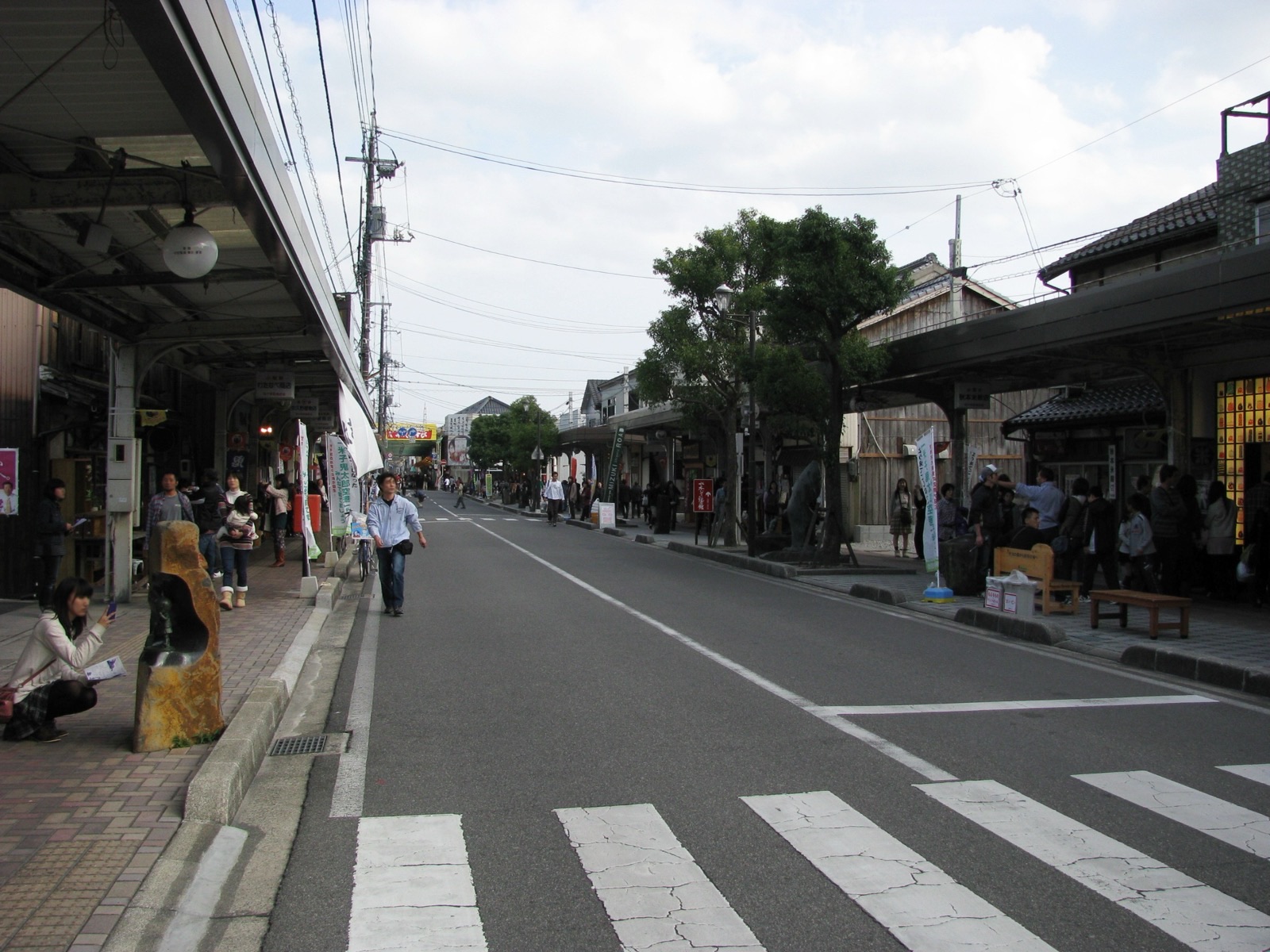
Mizuki Shigeru Road is a themed street in Sakaiminato, Tottori Prefecture, the birthplace of manga artist Shigeru Mizuki. Opened in July 1993 with 23 bronze statues, it has grown into a walkway populated by well over a hundred yokai figures.
The road runs roughly 800 meters from JR Sakaiminato Station toward the Mizuki Shigeru Museum, lined on both sides with cast-bronze sculptures. Each depicts a yokai, the spirits and monsters of Japanese folklore, drawn from the work of the town's most famous son.
Shigeru Mizuki was the manga artist behind GeGeGe no Kitaro, the long-running series that grew out of his earlier Hakaba Kitaro, and his stories did more than perhaps any other modern work to popularize yokai with a mass audience. Sakaiminato has built its identity around that legacy, presenting itself as a town of yokai.
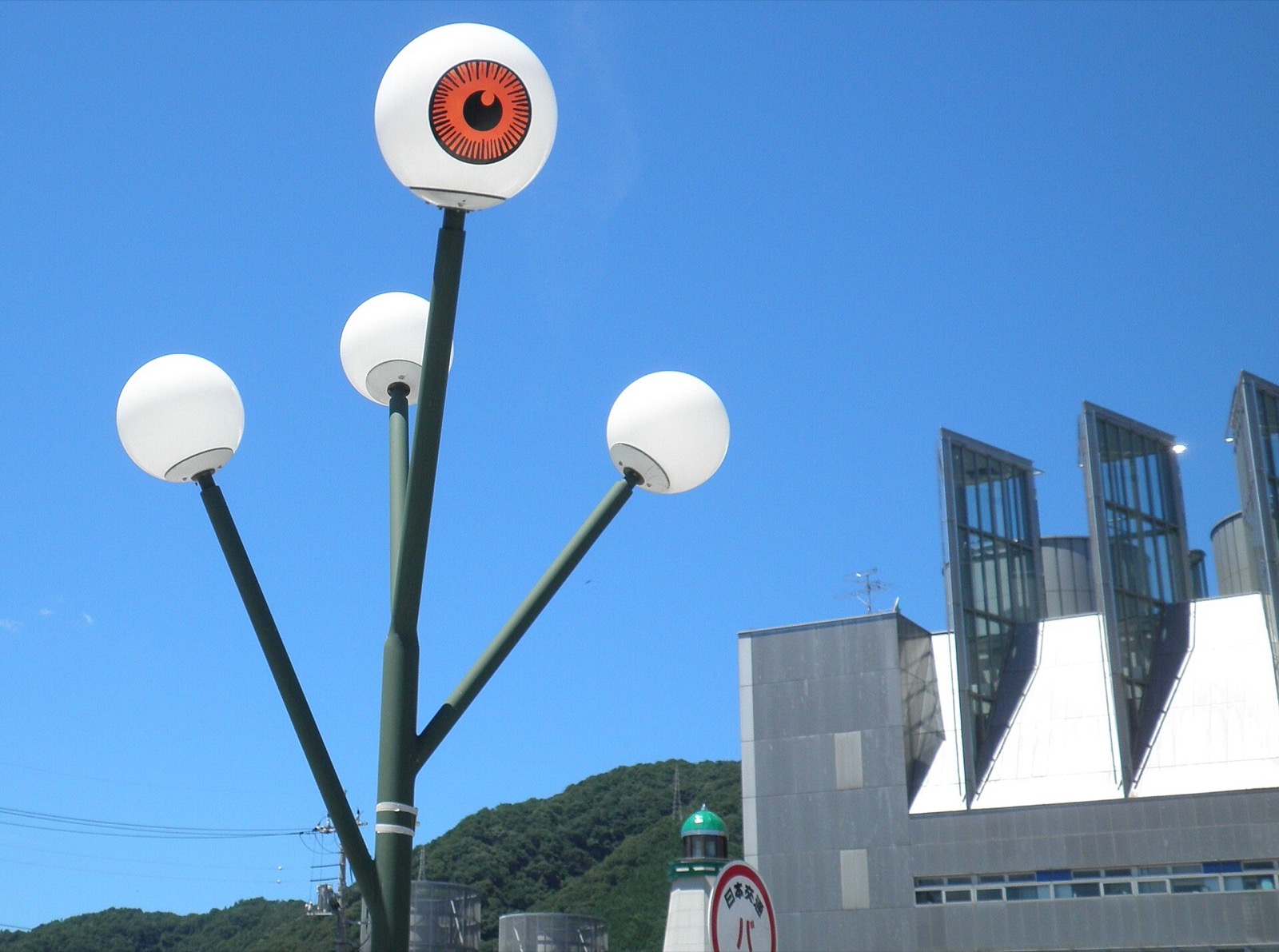
The street opened on 18 July 1993 with an initial set of 23 statues. The collection expanded over the following decades as the town invested in the attraction, and after a major renovation and reopening in 2018 the count reached 177 bronze figures, the number most consistently cited today.
The road is more than a row of statues. Visitors find a yokai shrine, a spring associated with the kappa water spirit, photo spots featuring characters such as Kitaro and Neko-Musume, and a postbox where outgoing mail receives a special themed postmark. Shops and food stalls along the way lean into the GeGeGe no Kitaro theme.
At the far end of the street stands the Mizuki Shigeru Museum, which opened in 2003 and sits within walking distance of the station. Its galleries cover Mizuki's life and work, recreate his studio, and lead visitors through themed spaces devoted to the yokai world he drew.
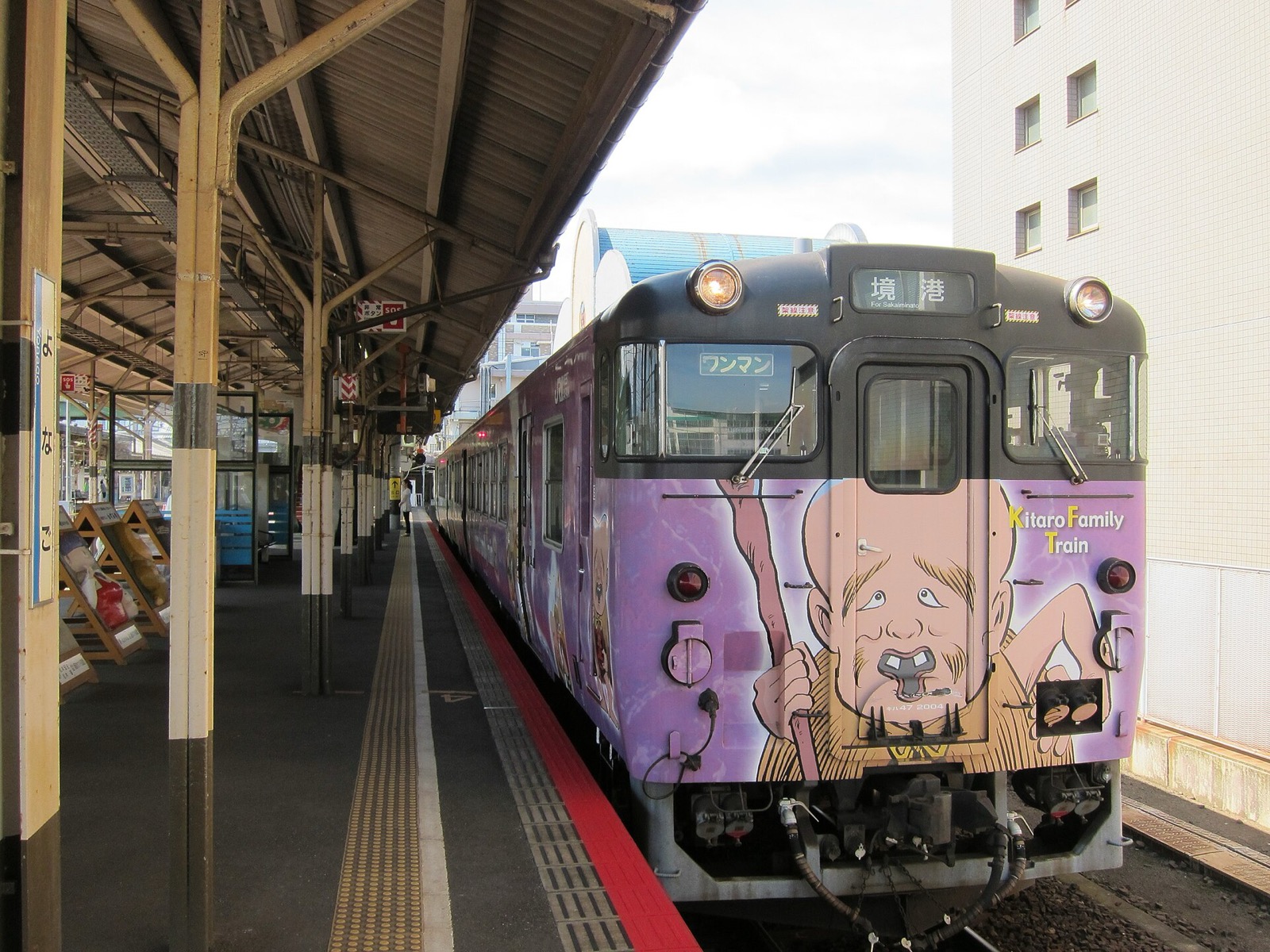
The yokai theme extends well beyond the road itself. The town's railway connection is decorated to match, with GeGeGe no Kitaro-themed trains running on the local line and stations carrying yokai nicknames, so the experience begins before a visitor even reaches the street.
Together the road, the museum and the themed transport have turned a small port city into a destination built almost entirely around one artist's imagination. What began as a modest set of two dozen statues in the early 1990s has become a sustained, town-wide tribute to Mizuki and the folklore he revived.
Compiled from public records.