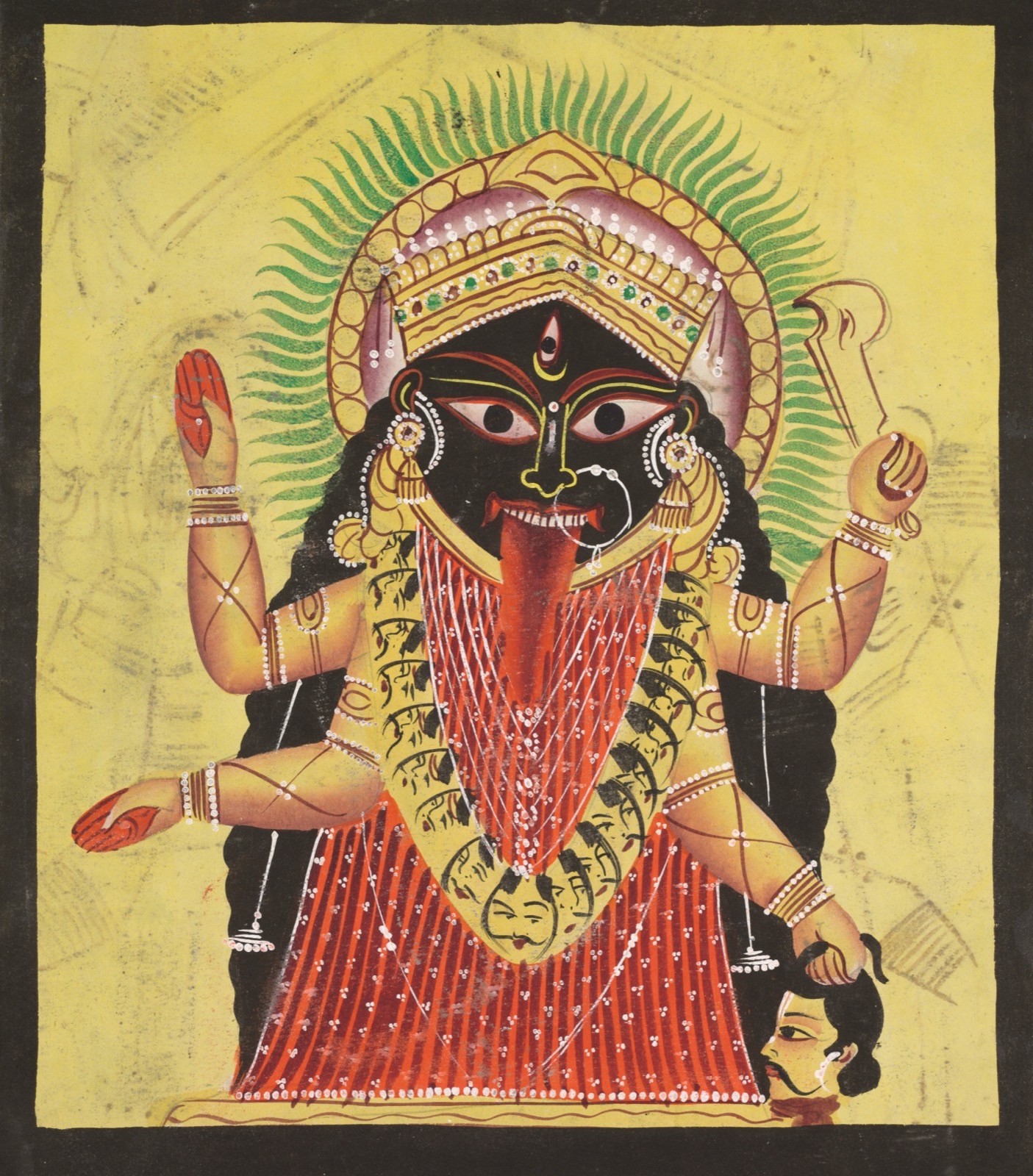
Kalighat painting, also called Kalighat Patachitra, is a style of Indian painting that originated in the 19th century near the Kalighat Kali Temple in Kolkata. It is built on bold outlines, vibrant colours and minimal backgrounds, an early ancestor of Indian popular graphic art.
The style grew up around the Kalighat Kali Temple in what was then Calcutta, in present-day West Bengal. Material evidence such as the paper and colours used, together with the dates European collectors acquired the works, places its emergence in the first half of the 19th century. The Victoria and Albert Museum dates the artworks in its collection to a span from the 1830s to the 1930s.
The patuas who made them were skilled artists from rural Bengal, especially from Midnapore and the 24 Parganas. Traditionally they painted long narrative stories on cloth or handmade paper scrolls, sometimes more than twenty metres long, in an art form known as patachitra. Each section was called a pat, which is why the artists were known as patuas, and they would move from place to place, singing the episodes shown in their scrolls.
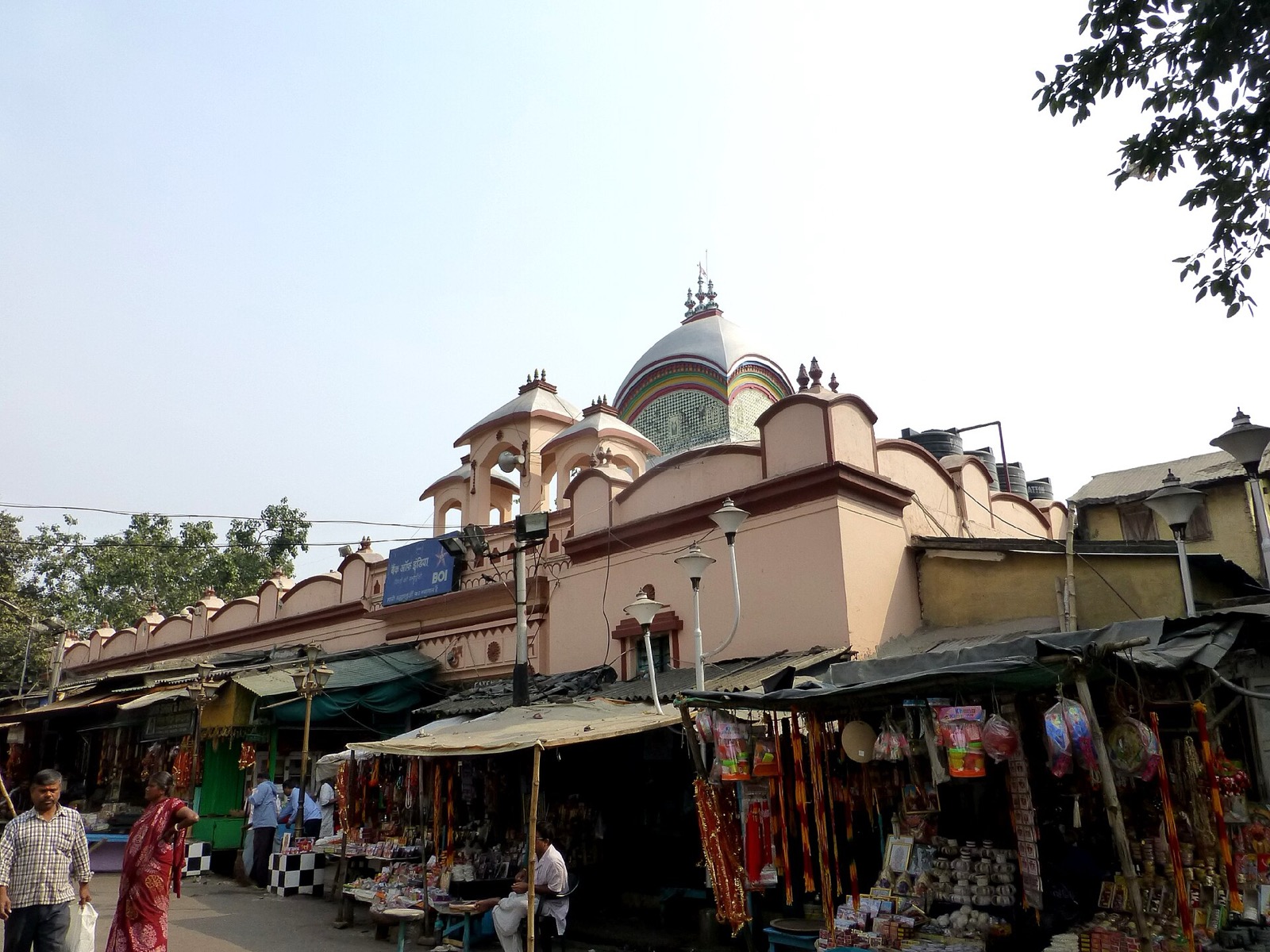
Calcutta changed their craft. As the city became a commercial centre, the Kalighat Temple drew crowds of pilgrims, and artisans migrated there to sell to a growing market. Faced with the need to produce quickly, the patuas abandoned the long narrative scroll for single square frames, the chouko pat, showing one or two figures, eliminating detail, leaving backgrounds plain, and using a basic palette, helped by imported mill-made paper and ready-made paints.
The method was a model of efficiency. The work was managed by the family unit like an assembly line, with one artist copying the outline, another doing the modelling of flesh and muscle, a third adding colours, and a final pass of lamp black for the outlines. Colours were originally drawn from natural sources, blue from the Aparajita flower, yellow from turmeric, black from lamp soot.
The subjects ranged widely. Pilgrims bought images of Hindu deities, especially Kali, along with Shiva, Lakshmi, Durga and scenes from Krishna's childhood. But the patuas also turned a sharp eye on contemporary Calcutta, recording the manners of the babu, social scandals and satire, including the famous image of a cat with a Vaishnavite mark on its forehead stealing a crayfish, read as a comment on religious hypocrisy.
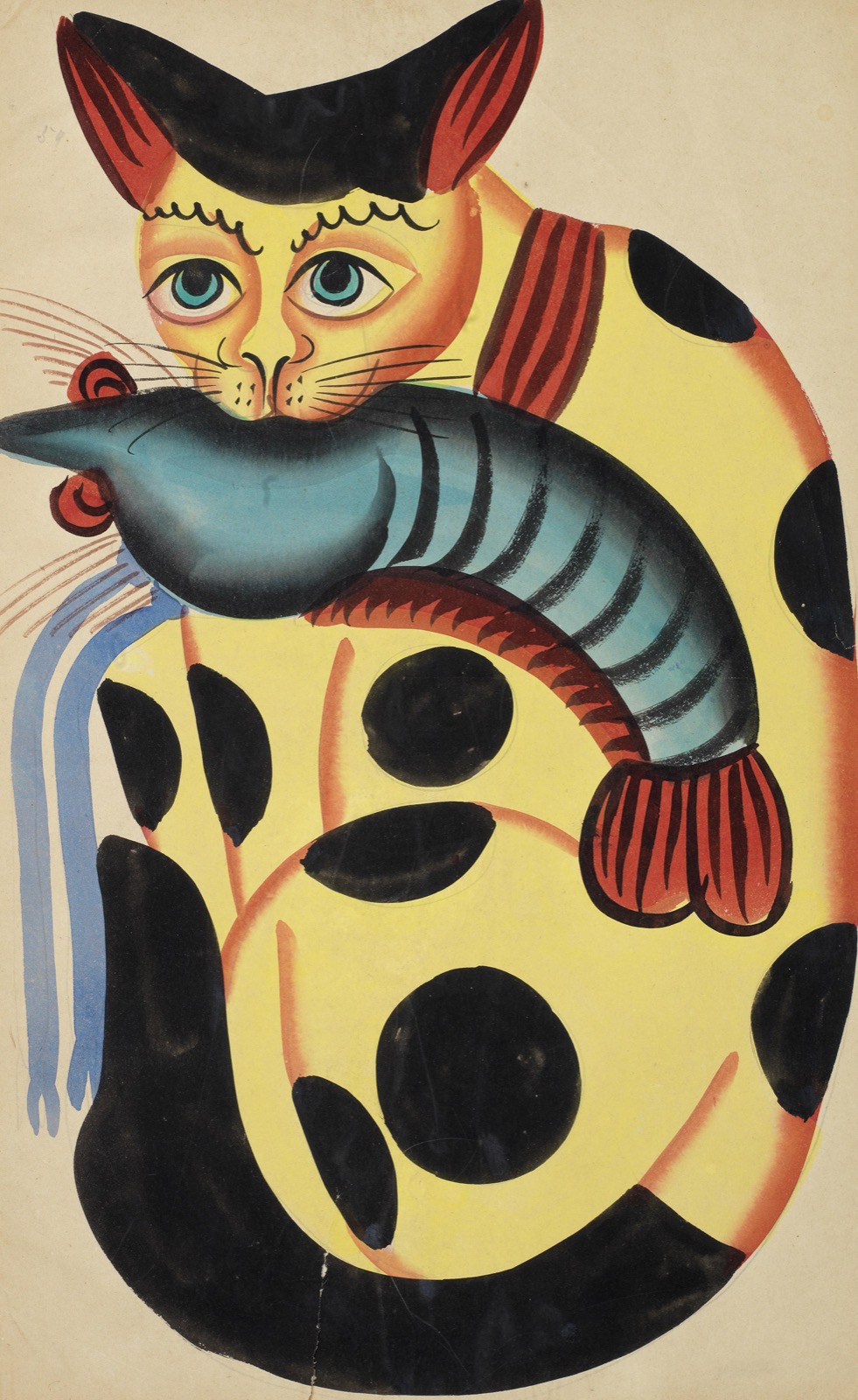
The drawing itself drew admiration. The collector Ajit Ghose described the line as made with one long bold sweep of the brush, without the faintest indecision or tremor, often taking in the whole figure. He compared the freshness and spontaneity of the work to Chinese calligraphy.
The paintings travelled far. Easily portable and concise, they were carried home as souvenirs by foreign visitors. John Lockwood Kipling, father of Rudyard Kipling, held some 233 such paintings, donated by his son to the Victoria and Albert Museum in 1917. Today the V&A in London holds the single largest collection of Kalighat paintings in the world, with 645 works. Their bold outlines, flat colour and single-frame compression of myth and satire make them a clear ancestor of India's later popular graphic art.
Compiled from public records.