When conversations about Indian superheroes begin today, names like Shaktimaan, Krrish, and Ra.One often dominate popular memory. Yet decades before Indian superheroes found success on television and cinema screens, comic books had already introduced a character who would redefine the country's superhero landscape.
His name was Nagraj.
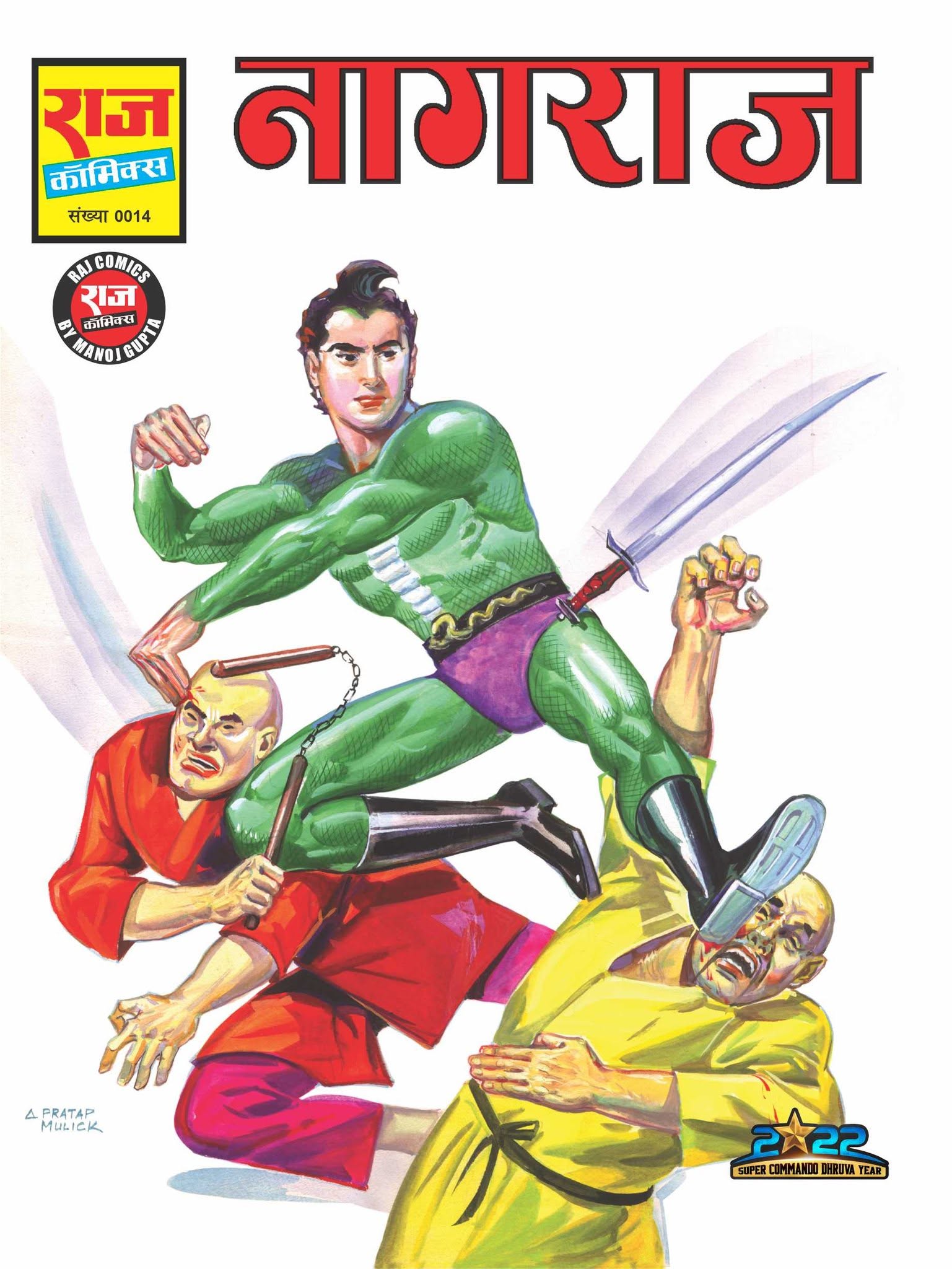
First published by Raj Comics in 1986, Nagraj became India's first major homegrown comic-book superhero and one of the country's most recognizable fictional icons. With his emerald-green body, purple costume and cobra-shaped belt, he looked unlike any hero Indian readers had encountered before. But while his appearance was unforgettable, it was the world he inhabited and what he represented that transformed him into a cultural phenomenon.
Superpowers were never what made Nagraj a hero. His real power was making ordinary readers believe they could be heroes too.
Created by Rajkumar Gupta along with Sanjay Gupta, Manoj Gupta, and Manish Gupta, Nagraj made his debut in a story written by Parshuram Sharma and illustrated by legendary artist Pratap Mullick. His success laid the foundation for Raj Comics' shared superhero universe, paving the way for iconic characters including Super Commando Dhruva, Doga, Parmanu, Bhokal, Anthony, Tiranga, Shakti, and many others.
Nearly four decades later, Nagraj continues to occupy a unique place in Indian popular culture, not merely as a comic-book hero, but as one of the earliest examples of India creating a superhero mythology rooted in its own traditions rather than borrowing from the West.
Unlike many superheroes whose powers originated from alien worlds or scientific accidents, Nagraj drew inspiration from India's centuries-old reverence for serpents while setting it against a science-fiction backdrop.
Within the Raj Comics universe, millions of microscopic serpents inhabit his body, flowing through his veins and obeying his command. These snakes can transform into ropes, shields, weapons, scouts or restraints depending on the situation. His venom is among his deadliest abilities, capable of neutralizing enemies while, in certain stories, possessing remarkable healing properties. Alongside enhanced strength, extraordinary agility, regenerative abilities, hypnotic powers and heightened senses, Nagraj became one of the most formidable superheroes in Indian comics.
Yet his powers alone never defined him.
His origin was unusually layered for an Indian superhero of the 1980s. Introduced as a living weapon for global terrorism - kept obedient by a mind-control capsule the sinister Professor Nagmani had implanted in his head - Nagraj broke free only when the ascetic Baba Gorakhnath defeated him during a temple mission and removed the device. Rejecting violence as a means of domination, he dedicated himself to protecting humanity instead.
Rather than simply telling the story of a hero gaining extraordinary powers, Nagraj explored the idea that true heroism comes from choosing how power is used.
At a time when Superman watched over Metropolis and Batman protected Gotham City, Indian readers finally had a superhero who belonged to their own cultural imagination.
Nagraj's stories effortlessly blended mythology, espionage, fantasy, horror, science fiction and action. Ancient kingdoms existed alongside futuristic laboratories. Mythical serpents coexisted with terrorists, mad scientists, supernatural beings and alien civilizations. As the fictional city of Mahanagar gradually emerged as the center of Raj Comics' universe, Nagraj's adventures expanded across India and the world while retaining a distinctly Indian identity.
Unlike many superheroes inspired directly by American comics, Nagraj never felt like an imitation.
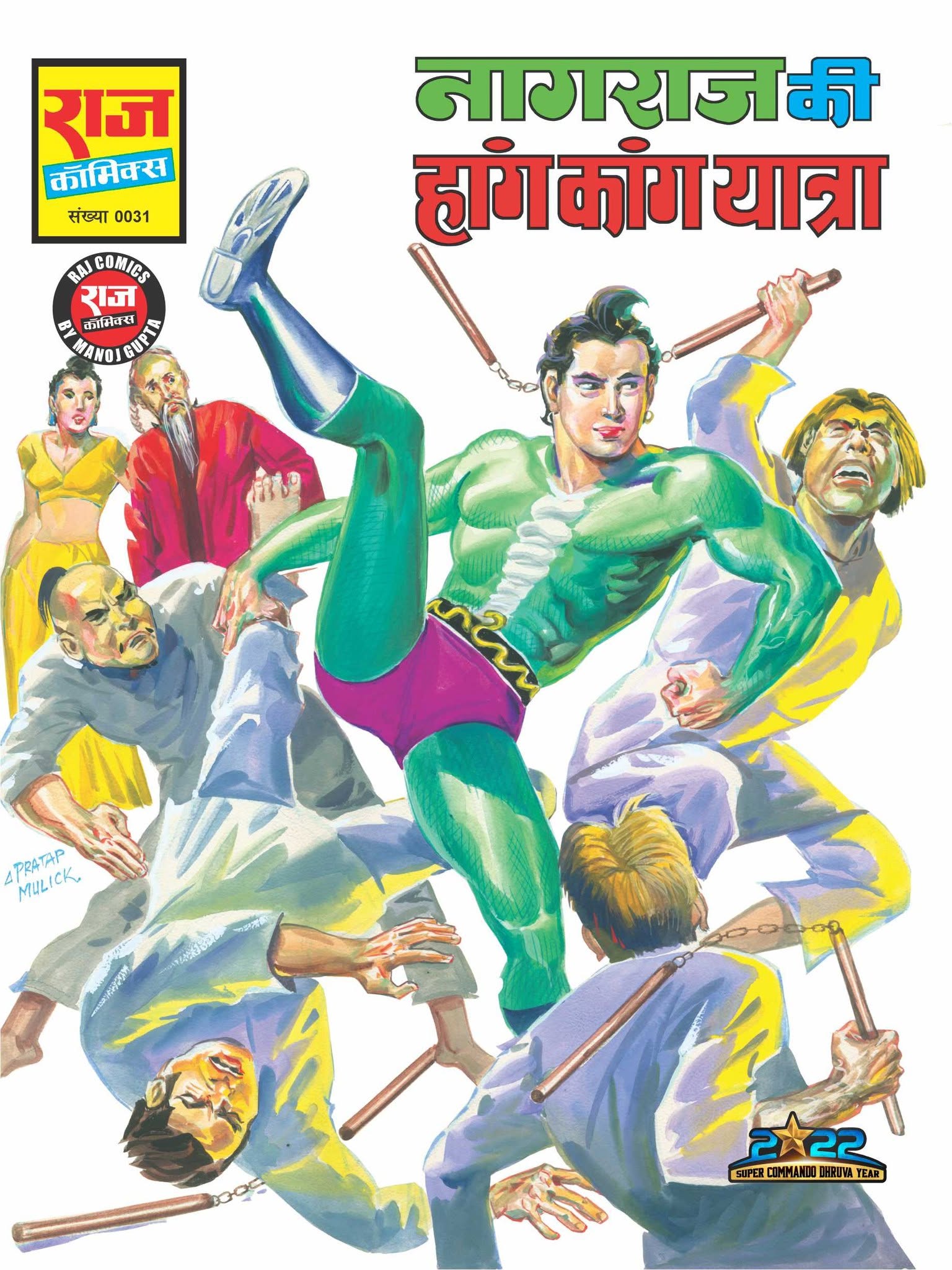
His stories embraced Indian folklore, religious symbolism surrounding snakes, yogic traditions and mythology while presenting them through the lens of modern superhero storytelling. The result was something uniquely Indian, a hero who could stand alongside international comic-book icons while remaining unmistakably rooted in his own culture.
For millions of readers who grew up during the late 1980s and 1990s, Nagraj became far more than another comic-book character.
Raj Comics were rented from neighborhood libraries, roadside stalls and local bookstores for just a few rupees. Children exchanged issues during summer vacations, argued over their favorite superheroes, collected posters, memorized villains and eagerly awaited the next release.
Reading Nagraj became a ritual.
Unlike today's digital entertainment, comics were physical experiences. Worn covers, folded pages and handwritten names inside borrowed copies became part of their charm. Entire friendships were built around discussing crossover stories and debating who was stronger - Nagraj, Dhruva, Doga or Bhokal.
The comics entertained, but they also encouraged curiosity. Scientific ideas frequently blended with mythology, introducing young readers to imaginative concepts while keeping the stories grounded in morality, courage and justice.
For many readers, revisiting Nagraj today is less about nostalgia alone than reconnecting with an important chapter of childhood.
The phenomenal success of Nagraj transformed Raj Comics from a growing publisher into India's most influential superhero comic company.
Throughout the late 1980s and 1990s, new heroes gradually entered the universe. Super Commando Dhruva represented intelligence and discipline rather than superpowers. Doga explored darker themes of crime and vigilantism. Parmanu embraced science fiction, while Bhokal drew upon mythology and fantasy.
Instead of existing independently, these heroes frequently crossed paths, creating interconnected stories years before cinematic universes became commonplace in global entertainment.
Nagraj remained the central pillar around which much of this universe evolved.
Over time, numerous writers and artists enriched his mythology, introducing new allies, villains, civilizations and supernatural dimensions that expanded the scale of his adventures far beyond his original stories.
Although Nagraj was conceived by the Gupta family and first brought to life visually by Pratap Mullick, successive generations of artists played a defining role in shaping how readers imagined the character.
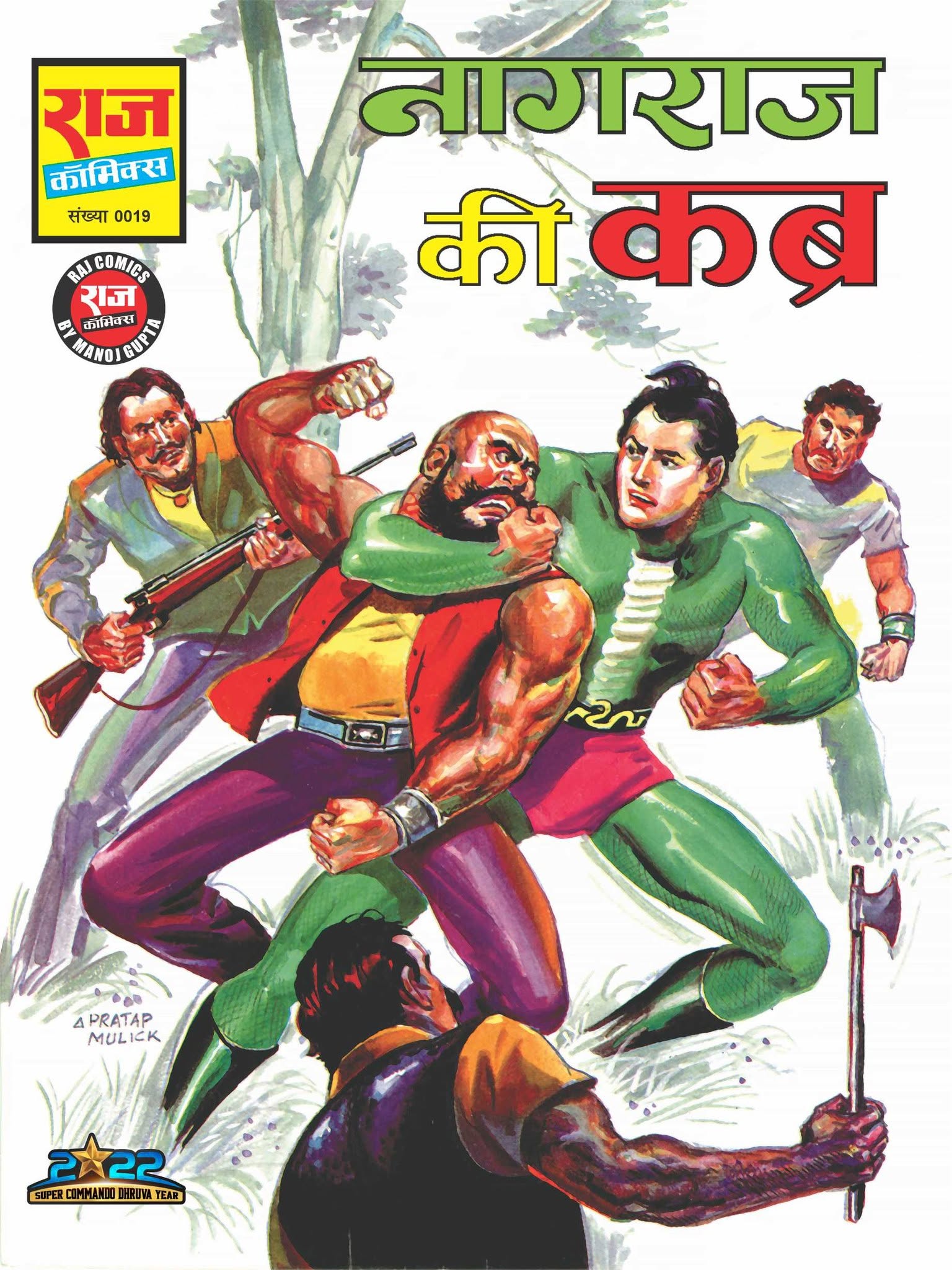
Pratap Mullick established the hero's iconic appearance and visual language during the formative years of Raj Comics. His dynamic storytelling and expressive character designs gave Nagraj an instantly recognizable identity that continues to influence depictions of the character today.
After illustrating the first Nagraj comic, Pratap Mullick informed Raj Comics that he would not be able to continue working on the series because he had been contracted by an animation studio in Hyderabad for an animation project. Following his departure, on Mullick's recommendation, his friend Sanjay Ashtputre was brought in as the new artist. Ashtputre illustrated Nagraj #2 through Nagraj #6, bringing noticeable changes to the character's visual appearance, including his scales, hairstyle, facial features, physique, and even the addition of gloves in some illustrations.
As Nagraj entered a new creative phase in the mid-1990s, Anupam Sinha played a decisive role in transforming both the character and his fictional universe. Already celebrated as the creator, writer and artist of Super Commando Dhruva, Sinha began working extensively on Nagraj around 1995. Unlike creators who contributed only scripts or artwork, he frequently handled both responsibilities, allowing the visual storytelling and narrative structure to develop with a rare sense of unity.
His first major contribution was the five-part Khazana Series, comprising Shakoora Ka Chakravyuh, Nagraj Ka Ant, Zahar, Nagpasha and Khazana. Published across 1995 and 1996, the storyline did far more than introduce a new conflict: it substantially reconstructed Nagraj's origin and revealed that the story he - and readers - had previously accepted was incomplete.
The series traced Nagraj's birth to the ancient kingdom of Takshaknagar, ruled by his parents, King Takshakraj and Queen Lalita. Because the royal couple had no child, the king's younger brother, Nagpasha, expected to inherit the throne. When Queen Lalita finally became pregnant, Nagpasha saw the unborn child as a threat to his ambitions and conspired against her.
During a ritual dedicated to the serpent deity Dev Kaljayi, Nagpasha secretly replaced the queen's offering with a dead mongoose - an act of profound insult to the snake god. Enraged, Kaljayi struck Lalita with his venomous breath. Although the deity later revealed a way to preserve her life, the curse passed to her unborn child. When the baby was delivered, his body was blue and motionless, leading everyone to believe that the infant prince had been born dead.
The supposedly lifeless child was cast into a river, but his story did not end there. Guided by Dev Kaljayi, the ageless Ichchhadhaari serpents of a hidden island called Nagdweep - King Maniraj and Queen Manika - recovered the infant and slowly nursed him back to life, their treatment gradually turning his blue, lifeless body the emerald green he would come to be known by. An evil tantrik named Vishandhar eventually returned him to the same riverbank, where a temple priest discovered him and handed him over to Professor Nagmani, who had been searching the forest for snakes. Recognising the child's extraordinary venom and regenerative abilities, Nagmani raised him and eventually transformed him into a weapon of terrorism.
This revelation significantly revised Nagraj's original history - gave the character a royal and mythological lineage far richer than his earlier identity as an artificial creation of Professor Nagmani. Professor Nagmani had not created him, as the earliest stories appeared to suggest.
The arc also established Nagpasha as more than another recurring villain. He was revealed to be Nagraj's paternal uncle: a man whose hunger for the throne had shaped the hero's fate before his birth and who was ultimately responsible for the destruction of his family. By connecting Nagraj's greatest enemy directly to his parents and lost kingdom, Anupam Sinha turned their conflict into an intensely personal struggle over bloodline, inheritance and betrayal.
Through these revelations, the Khazana Series redefined Nagraj's mythology. Professor Nagmani was no longer his true creator, but the man who later acquired and exploited a child whose extraordinary powers had much older and richer origins. The storyline gave Nagraj biological parents, a royal heritage, a lost homeland and a family enemy, while demonstrating Sinha's gift for long-form storytelling in which revelations unfolded across several interconnected issues rather than within isolated adventures.
Under Sinha, Nagraj's stories became more layered, visually ambitious and emotionally complex. He introduced stronger anatomical realism, cinematic compositions, elaborate action sequences and sprawling narratives that often unfolded across multiple issues. His work also brought Nagraj into closer contact with Super Commando Dhruva and helped establish the crossovers that became some of Raj Comics' most anticipated releases.
Most importantly, this era marked a fundamental shift in Nagraj's identity. Having spent years travelling across the world in pursuit of his mission to eliminate terrorism, he was gradually given a more permanent personal world. He eventually made Mahanagar his home, assumed the civilian identity of Raj - an employee of a television channel he secretly owns - and developed relationships, allies and responsibilities beyond his original global mission. This transformation gave the character a stronger emotional foundation and allowed readers to see him not only as an almost invincible serpent warrior, but also as someone attempting to build a life and find a place to belong.
Sinha's interpretation became known as Vishwarakshak Nagraj, distinguishing it from the later parallel version of the character who continued travelling internationally as Aatankharta Nagraj. The distinction is important: the original continuity developed by Sinha moved Nagraj toward Mahanagar and a broader mythological universe, while the alternate World Terrorism timeline imagined what might have happened had he never settled there and instead continued his campaign against global terrorism.
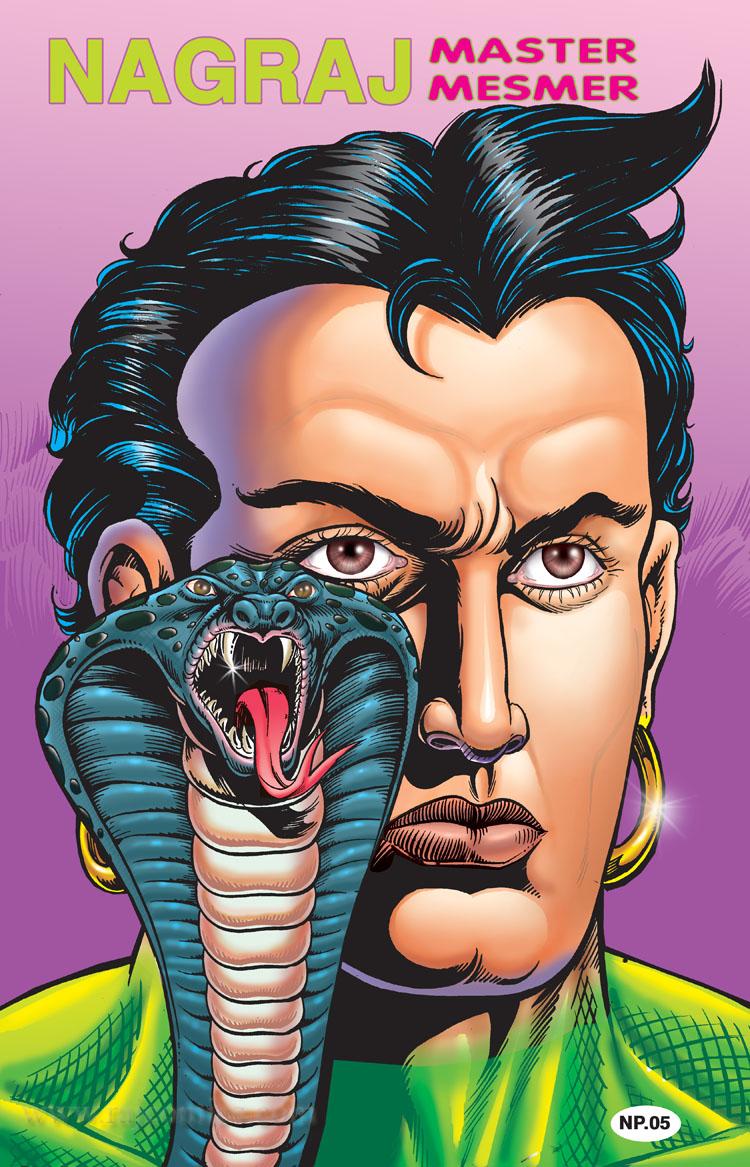
For decades, Anupam Sinha remained one of the most influential creative voices behind Nagraj, writing and illustrating many of the character's best-known stories and major crossover events. Although his involvement has varied over time, he has continued to return occasionally to Nagraj, including later projects that expand the serpent hero's mythology. His contribution did more than modernise the character: it gave Nagraj a richer world, a deeper history and a narrative scale that helped elevate him from a popular action hero into the central figure of an expansive Indian superhero mythology.
A different interpretation of the hero emerged in 2007 with the launch of Aatankharta Nagraj, widely known as the World Terrorism Series. This parallel continuity followed a Nagraj who did not settle in Mahanagar but instead continued travelling across the world to dismantle terrorist networks, criminal organisations and international conspiracies. The series returned Nagraj to his original purpose of combating terrorism while placing him within modern geopolitical conflicts spanning multiple countries. Rather than relying primarily on fantasy and supernatural threats, these stories emphasized espionage, organized crime, international conspiracies and high-stakes action.
Visually, the series marked one of the biggest stylistic shifts in Nagraj's history.
Illustrator Lalit Kumar Sharma introduced a more flexible, cinematic and contemporary interpretation of the character. His dynamic action choreography, detailed environments and expressive storytelling gave the series an entirely new energy.
Complementing Sharma's artwork was Jagdish Kumar, whose intricate inks added depth, texture and dramatic contrast to the pages. Together, the artist-inker duo became closely associated with the visual identity of the World Terrorism Series, creating some of the most memorable imagery in modern Raj Comics.
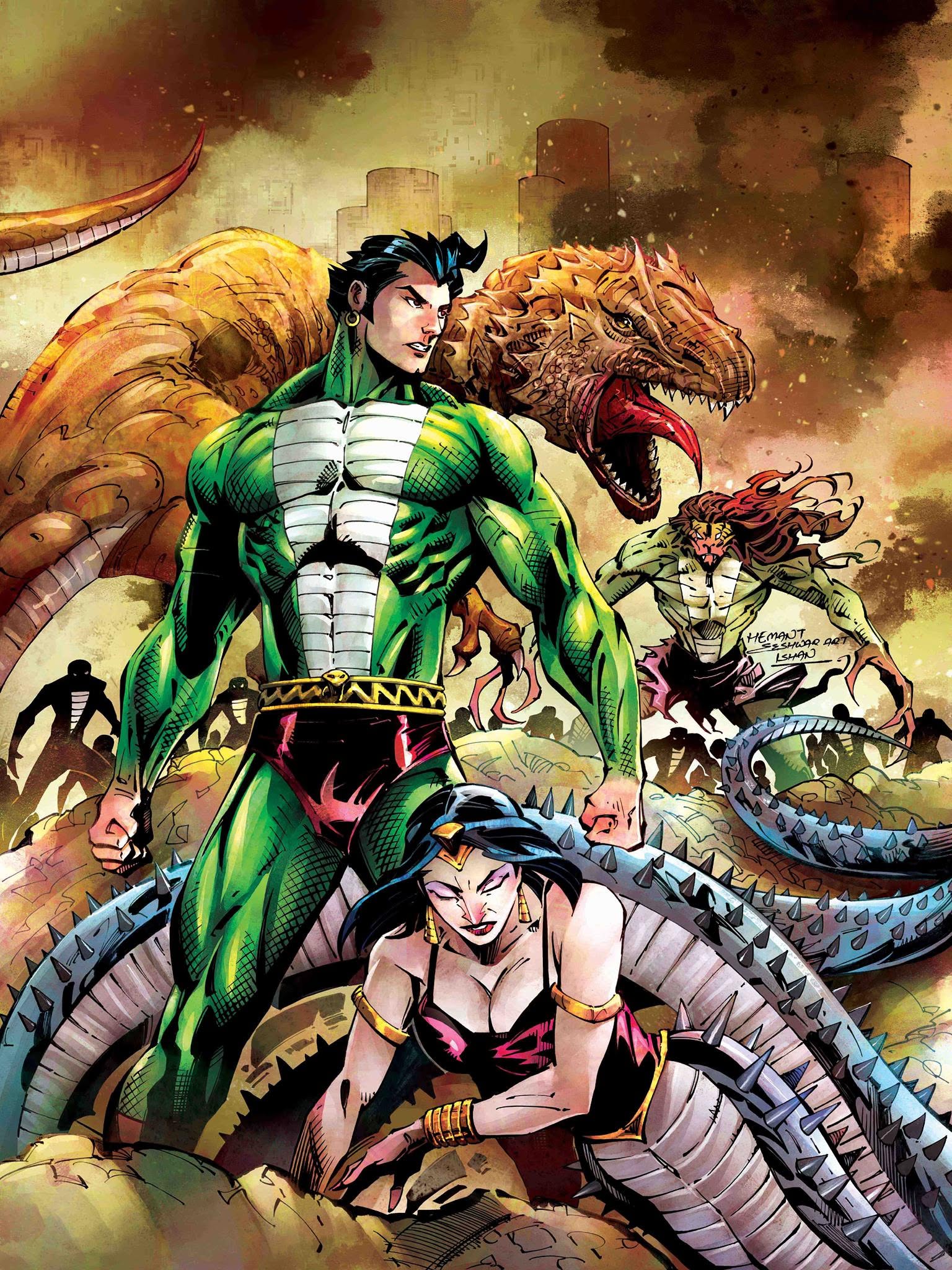
Another major interpretation of the character emerged around 2010 with Narak Nashak Nagraj, first introduced in the Nagraj - Doga story Halla Bol. This version was visually and tonally distinct from both Vishwarakshak Nagraj and Aatankharta Nagraj. With longer hair, a jacket and trousers in place of the familiar costume, he appeared less like a conventional superhero and more like a wandering warrior shaped by a darker world.
The early phase continued through comics such as Abhishapt, Aadamkhor, Infected and Mrityujivi. The writing credits varied across the first few stories, with Sanjay Gupta, Tarun Kumar Wahi, Vivek Mohan and Mandaar Gangale among the credited contributors. Nitin Mishra subsequently became the principal writer associated with the character, while Hemant Kumar developed the visual identity most readers now associate with Narak Nashak.
Unlike Aatankharta Nagraj, whose adventures centred on terrorism and international crime, Narak Nashak's stories moved decisively into horror and dark fantasy. He fought vampires, demons, zombies and other supernatural creatures, giving the series a grittier and more macabre atmosphere. He also commanded a distinctive group of serpent powers, including Sheetika, Takshika and Agnika, and travelled with a flying serpent named Sarpat.
The character's past was explored more fully through Maqbara and Takshak, which served as prequels to the formal Utpatti Shrankhla, or origin series. That four-part storyline comprised Narak Nashak, Narak Niyati, Narak Dansh and Narak Aahuti. Written by Nitin Mishra and illustrated by Hemant Kumar, the arc reconstructed Nagraj's birth, transformation and early journey within this separate continuity.
Rather than simply updating the original hero's costume or setting, Narak Nashak demonstrated how flexible the idea of Nagraj had become. Vishwarakshak Nagraj occupied the expansive mythology and interconnected universe shaped largely by Anupam Sinha. Aatankharta Nagraj continued the mission against global terrorism. Narak Nashak entered a harsher realm of monsters, occult forces and horror.
Together, these parallel interpretations allowed different creative teams to explore contrasting possibilities while preserving the central image of Nagraj as a serpent-powered protector.
For many younger readers, this era became their introduction to Nagraj, proving that the character could successfully evolve without losing the essence that had made him iconic.
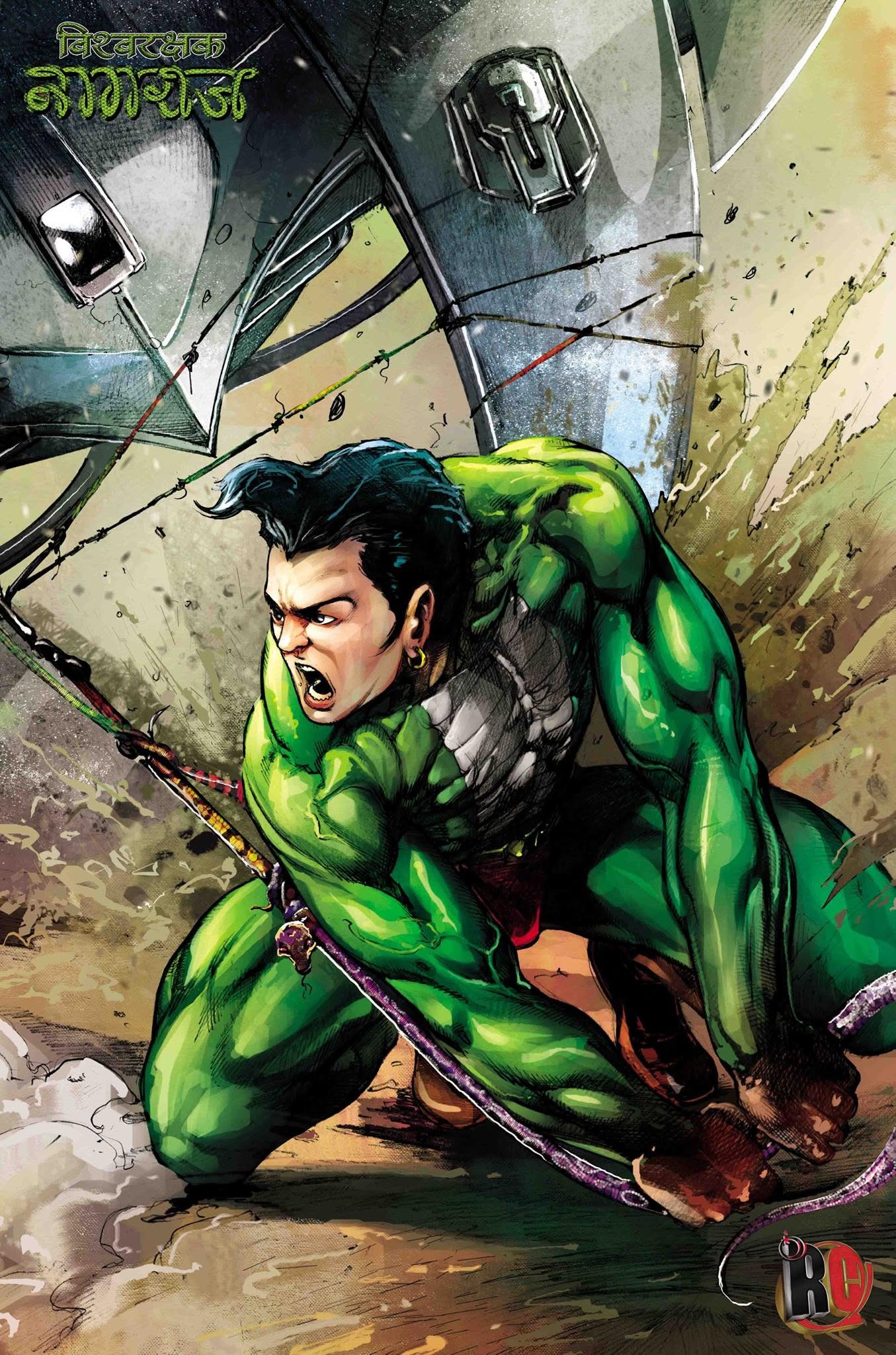
The idea for Nagraj was born from a simple absence.
The generation that created him had grown up without a homegrown superhero to call their own - and set out to give every Indian child one to look up to.
Yet extraordinary abilities were never the defining quality of the character.
Superpowers were never what made Nagraj a hero. His real power was making ordinary readers believe they could be heroes too.
That philosophy became central not only to Nagraj but to Raj Comics as a whole.
Its stories consistently emphasized courage, integrity, compassion and responsibility alongside thrilling action. Whether confronting terrorists, monsters or supernatural forces, Nagraj ultimately represented hope, resilience and the willingness to stand against injustice.
Like comic publishers across the world, Raj Comics eventually faced enormous changes in the entertainment industry.
The arrival of satellite television, video games, smartphones and streaming platforms fundamentally altered how younger audiences consumed stories. Hollywood's Marvel and DC franchises introduced superhero cinema on an unprecedented scale, while digital entertainment gradually replaced the neighborhood comic libraries that had once flourished across India.
Comic sales inevitably declined.
Yet Nagraj never disappeared.
Raj Comics continues to publish new stories, special editions and reprints while maintaining a devoted readership across India. Collectors actively preserve vintage editions, online communities continue discussing classic story arcs, and newer readers regularly discover the character through digital platforms.
The comics have also found enthusiastic readers beyond India.
In Nepal, some readers pick up Raj Comics simply to learn Hindi.
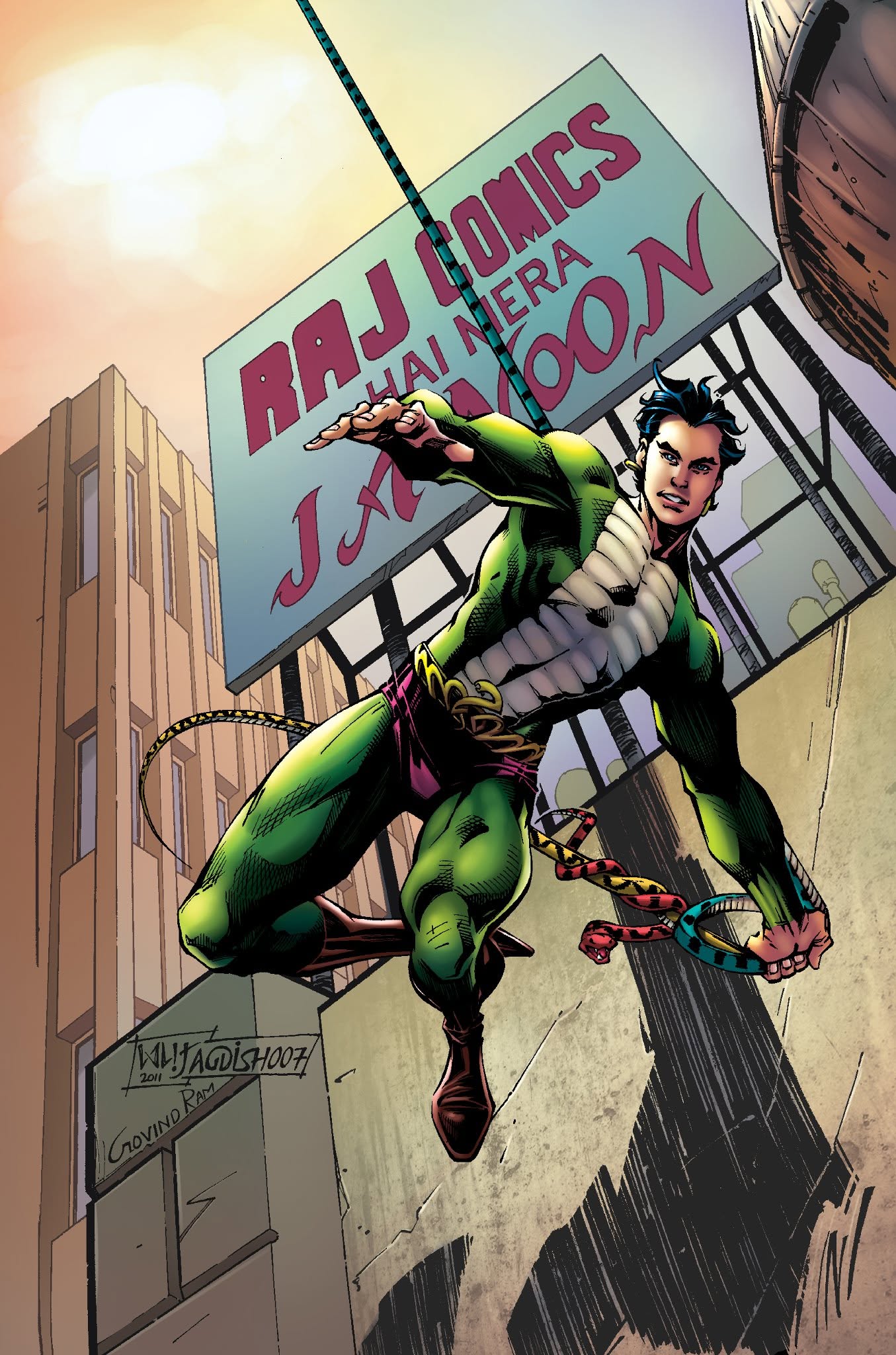
It says a lot about the reach of a character first created for Indian readers.
For decades, fans have imagined Nagraj making the leap from comics to live-action cinema.
Various reports over the years have linked Raj Comics characters to film adaptations, with discussions involving prominent filmmakers and actors periodically generating excitement. While no definitive live-action Nagraj film has yet materialized, interest in adapting the Raj Comics universe has remained remarkably consistent.
The enduring demand reflects the character's continued relevance.
In an era dominated by global superhero franchises, audiences still believe there is room for a distinctly Indian superhero universe rooted in local mythology, culture and storytelling traditions.
Forty years after his debut, Nagraj remains one of the defining achievements of Indian comics.
He demonstrated that Indian creators could build expansive superhero worlds without relying on Western templates. His adventures combined mythology, science fiction, espionage and fantasy into stories that felt both spectacular and unmistakably Indian.
More importantly, he gave generations of readers something they had rarely experienced before - a superhero who belonged entirely to them.
While countless superheroes have come and gone, few have maintained the cultural impact that Nagraj continues to enjoy after four decades.
His greatest legacy is not simply the villains he defeated or the extraordinary powers he possessed.
It is the fact that he inspired millions of readers to believe that India's own myths, stories and imagination were powerful enough to create heroes capable of standing alongside the greatest comic-book icons in the world.
Four decades later, the King of Snakes continues to reign - not merely as Raj Comics' flagship hero, but as one of the greatest legends in the history of Indian popular culture.