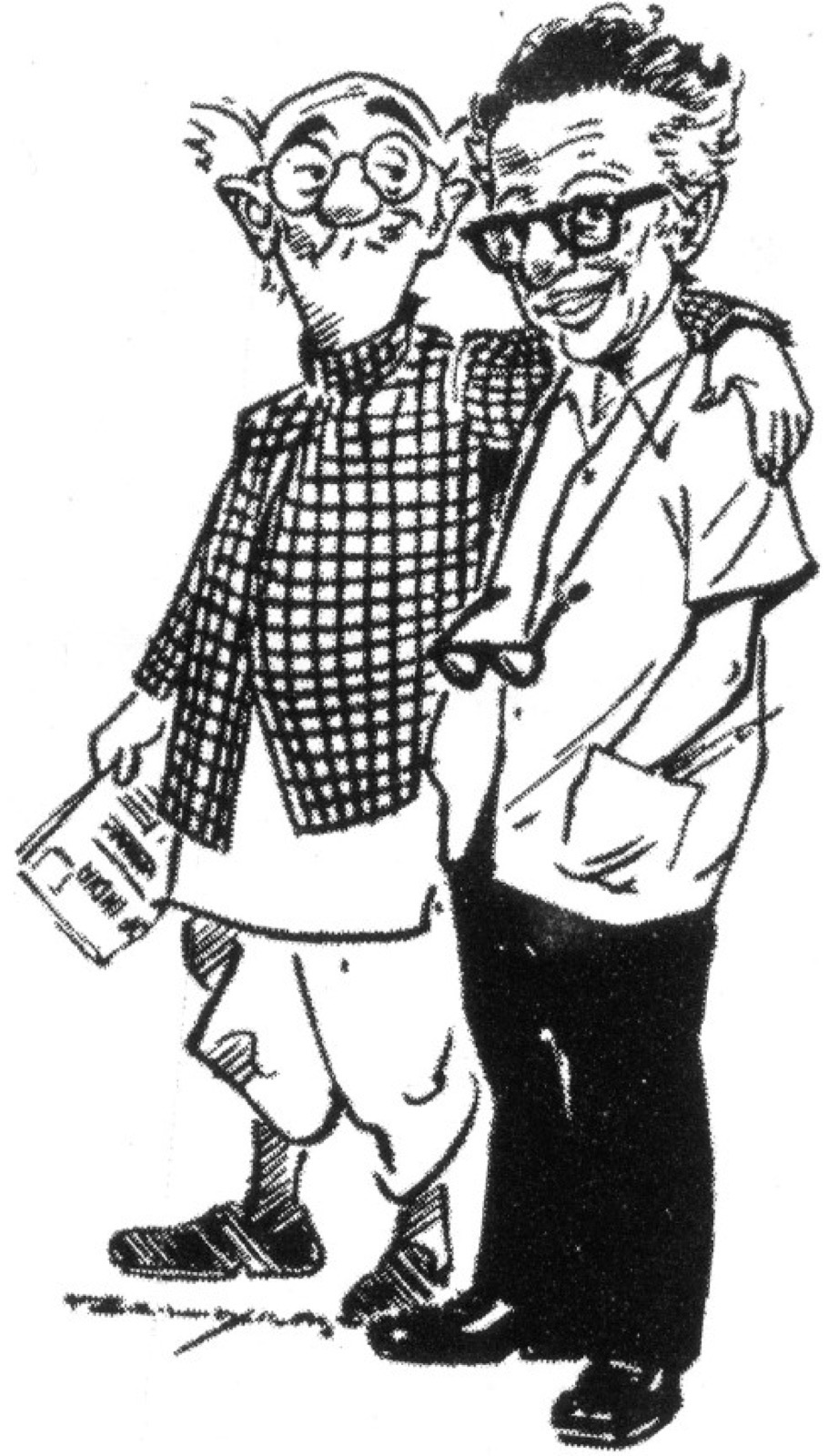
R. K. Laxman (1921 to 2015) was an Indian cartoonist best known for The Common Man and for his daily Times of India strip You Said It, which began in 1951. His Common Man became a lasting symbol of the ordinary Indian citizen.
Rasipuram Krishnaswami Laxman was born in Mysore on 24 October 1921 into a Tamil Hindu family, the youngest of eight children of a headmaster. His elder brother was the novelist R. K. Narayan. Laxman decided at the age of nine to become an artist, cycling around Mysore to observe and draw, and he was influenced by the British cartoonist David Low, whose work appeared occasionally in The Hindu.
His early path was not smooth. He applied to the Sir J. J. Institute of Applied Art in Mumbai, but the dean refused him admission, writing that his drawings lacked the talent to qualify. Laxman instead graduated with a Bachelor of Arts from the University of Mysore while contributing cartoons to magazines, and as a college student he illustrated his brother Narayan's stories in The Hindu.
His first full-time job was as a political cartoonist for The Free Press Journal in Mumbai, where Bal Thackeray was a colleague. In 1951 he joined The Times of India in Mumbai, beginning a career that spanned more than fifty years. It was there that the Common Man character, featured in his pocket cartoons, was born, portrayed as a witness to the making of democracy.
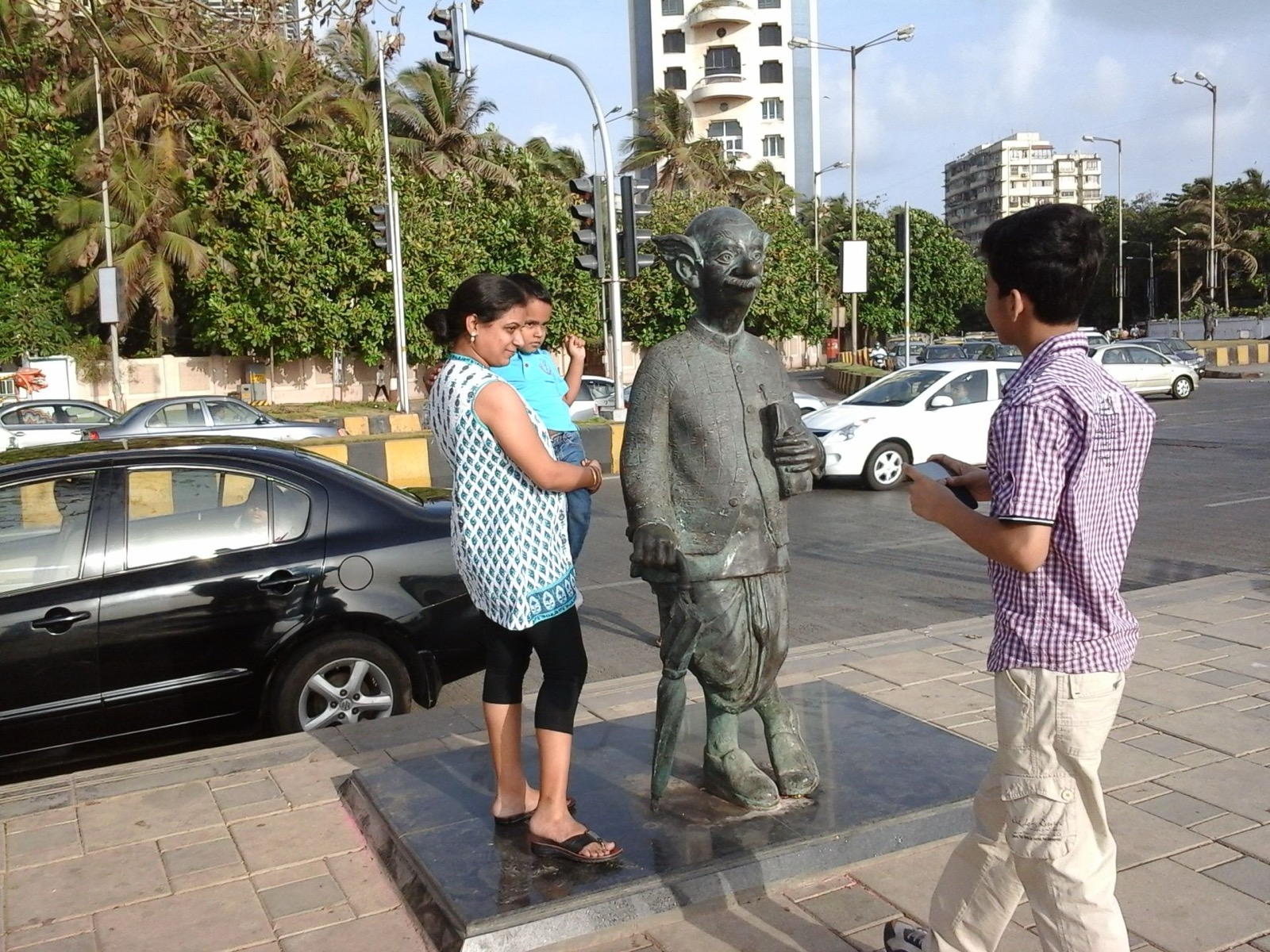
Scholars have read deep meaning into that quiet figure. His style is rooted in classical draftsmanship and controlled caricature, refining details rather than veering into grotesque exaggeration, and the Common Man does not intervene but sees, making the act of witnessing the central gesture of his work.
Laxman's reach extended beyond the editorial page. In 1954 he created the popular mascot Gattu for Asian Paints, drew the sketches for the television adaptation of his brother's Malgudi Days, and produced caricatures of figures such as David Low, T. S. Eliot and Bertrand Russell. He also wrote novels, the first titled The Hotel Riviera. During the 1975 to 1977 Emergency, some of his cartoons were censored as he frequently targeted Indira Gandhi's policies.
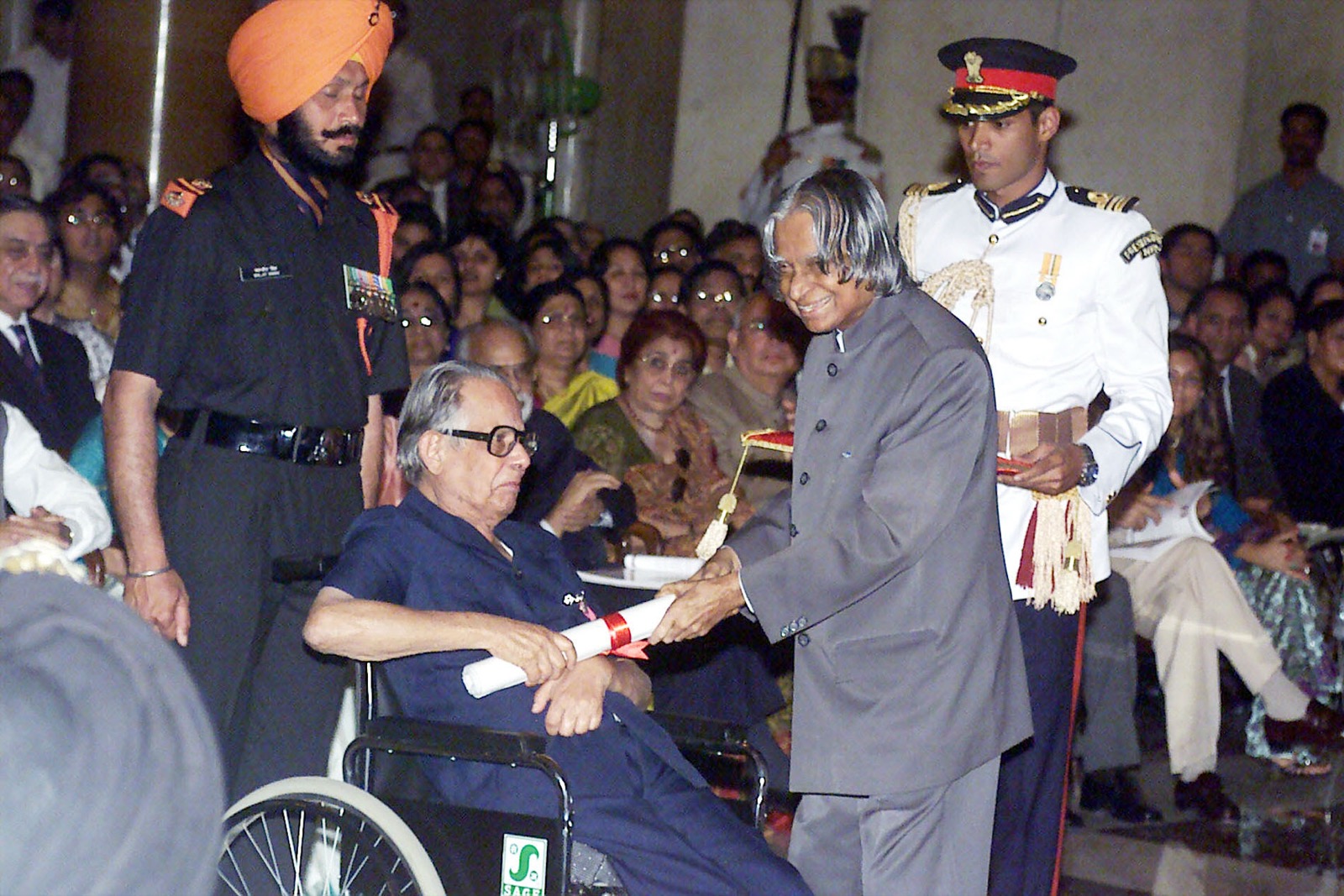
His honours reflected his standing. He received the Padma Bhushan in 1973 and the Padma Vibhushan in 2005, presented by President A. P. J. Abdul Kalam, as well as the Ramon Magsaysay Award. On his 94th birthday in 2015 Google honoured him with a doodle.
Laxman died on 26 January 2015, India's Republic Day, in Pune, at the age of 93, after multiple organ failure. He was accorded a state funeral, and his body was kept near the Common Man statue at the Symbiosis Institute in Pune. The R. K. Laxman Museum in Pune now houses over 35,000 of his illustrations.
Compiled from public records.